The SQ3R Reading Method: Turn Heavy Textbooks Into Crisp, Exam-Ready Notes
Read thirty pages of a dense textbook only to forget the main argument? Learn how the five-step SQ3R method transforms passive reading into structured, lasting notes.
Why Cover-to-Cover Reading Fails With Dense Textbooks
Your brain retains far more when it reads to answer a specific question instead of glazing over paragraphs.
Opening a 40-page chapter and highlighting line after line feels productive, yet two hours later most details blur together. Textbooks are not novels—they are structured reference manuals. The SQ3R reading method turns passive page-turning into an active search for clear answers.
The Five Steps of SQ3R in Practice
- Survey: Spend three minutes scanning headings, bold terms, diagrams, and the chapter summary to map the territory.
- Question: Turn every subheading into a concrete question before reading the section.
- Read: Read one section at a time specifically to answer your question—cutting through filler naturally.
- Recite: Look away and summarize the answer in your own words, either in writing or out loud.
- Review: Revisit your clean Q&A summary 24 hours later and again before exams.
Do not read a textbook like a novel—interrogate it with questions and keep only the crisp answers.
Make the Recite and Review Steps Twice as Fast
Pairing structured text with local voice tools removes the slow friction of textbook note-taking.
Two simple habits turn SQ3R into an effortless weekly routine:
1. Recite Out Loud Using Local Speech-to-Text
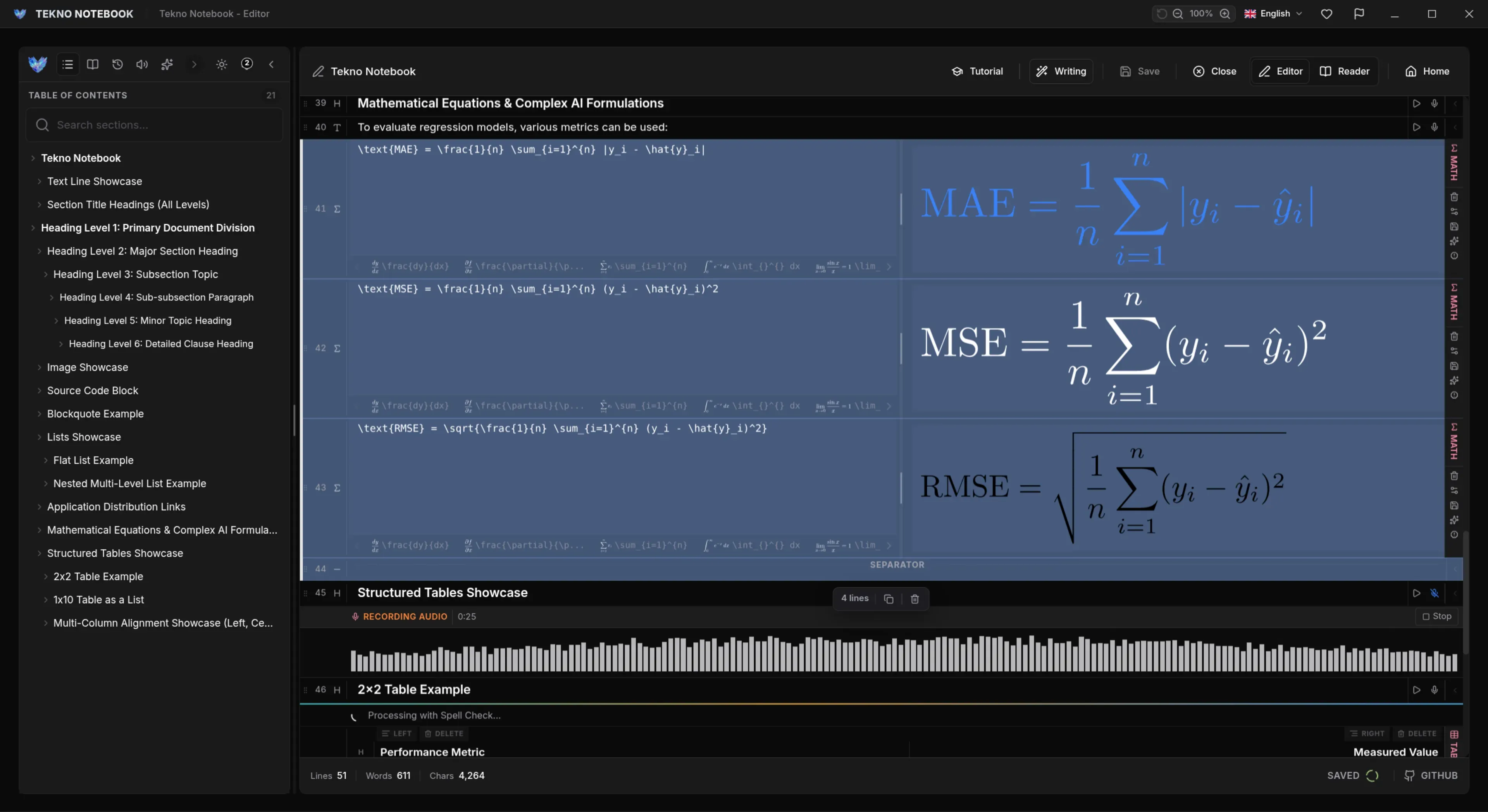
Speaking an answer in your own words is faster and tests comprehension better than copying sentences. Tekno Notebook’s offline speech-to-text lets you dictate your summary straight beneath each heading.
2. Review Your Q&A Sheet Hands-Free
Play back your finished chapter notes with offline text-to-speech and live line tracking in Tekno Notebook to refresh an entire unit in ten calm minutes.

Tekno Notebook
Listen to Your Notes Like a Media Player and Retain Twice as Much
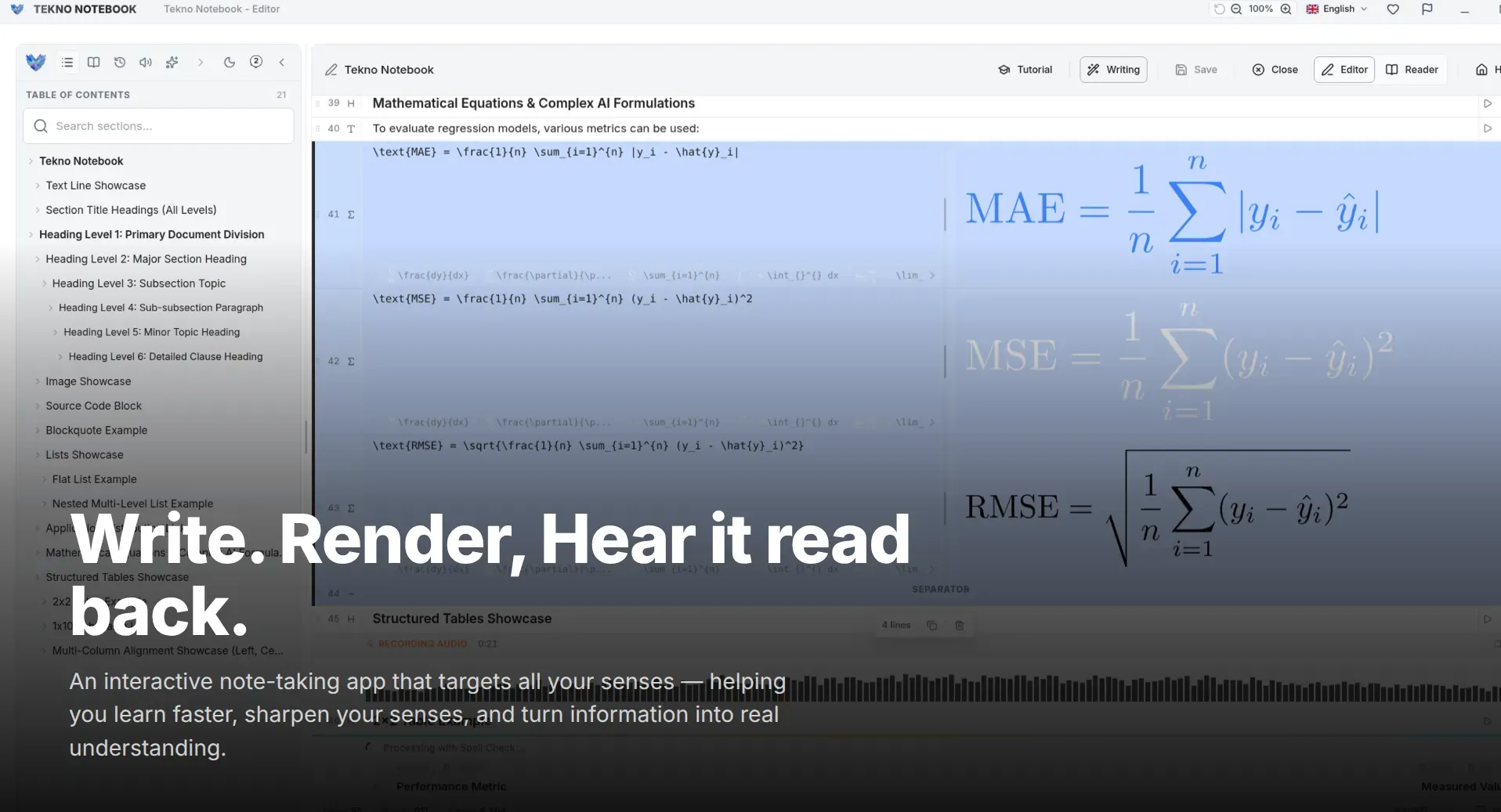
Transform static written notes into an interactive audio track. Tekno Notebook combines built-in Text-to-Speech, Speech-to-Text, and synchronized line highlighting in a distraction-free desktop app.
- Built-in media player with play, pause, seek, and playback speed controls
- Auto-Tracking highlights the exact sentence or line as it is read aloud
- Multilingual Text-to-Speech support including Arabic, English, Spanish, Portuguese, and Chinese
- Integrated Speech-to-Text (STT) for dictating quick insights directly into your notes