Rubber Duck Debugging and Studying: Why Speaking Out Loud Fixes Bugs and Gaps Faster
Ever solved a tough problem mid-sentence while explaining it to someone else? Learn how verbalizing code and study concepts exposes hidden logic flaws immediately.
Why Out-Loud Explanations Beat Silent Staring
Silent thinking skips steps automatically; speaking forces your brain to verify every assumption.
When you explain a problem line by line out loud, the hidden flaw usually reveals itself before you finish the sentence.
Programmers call this rubber duck debugging: walking through broken code aloud to an inanimate object until the bug jumps out. Cognitive psychology backs it up for studying too—the production effect shows that speaking concepts aloud strengthens recall and immediately flags where your understanding is fuzzy.
Run a 4-Step Verbal Walkthrough
- State the exact expected outcome in one plain sentence.
- Describe what is actually happening without guessing the cause.
- Explain every line of code or proof step as if teaching a beginner.
- Stop the instant you hesitate or say 'somehow'—that is your exact bug or knowledge gap.
# Problem / Topic:
# Expected Result:
# Actual Result:
# Step-by-Step Spoken Explanation:
# 1. Input enters ...
# 2. Condition checks ...
# 3. Gap spotted at ...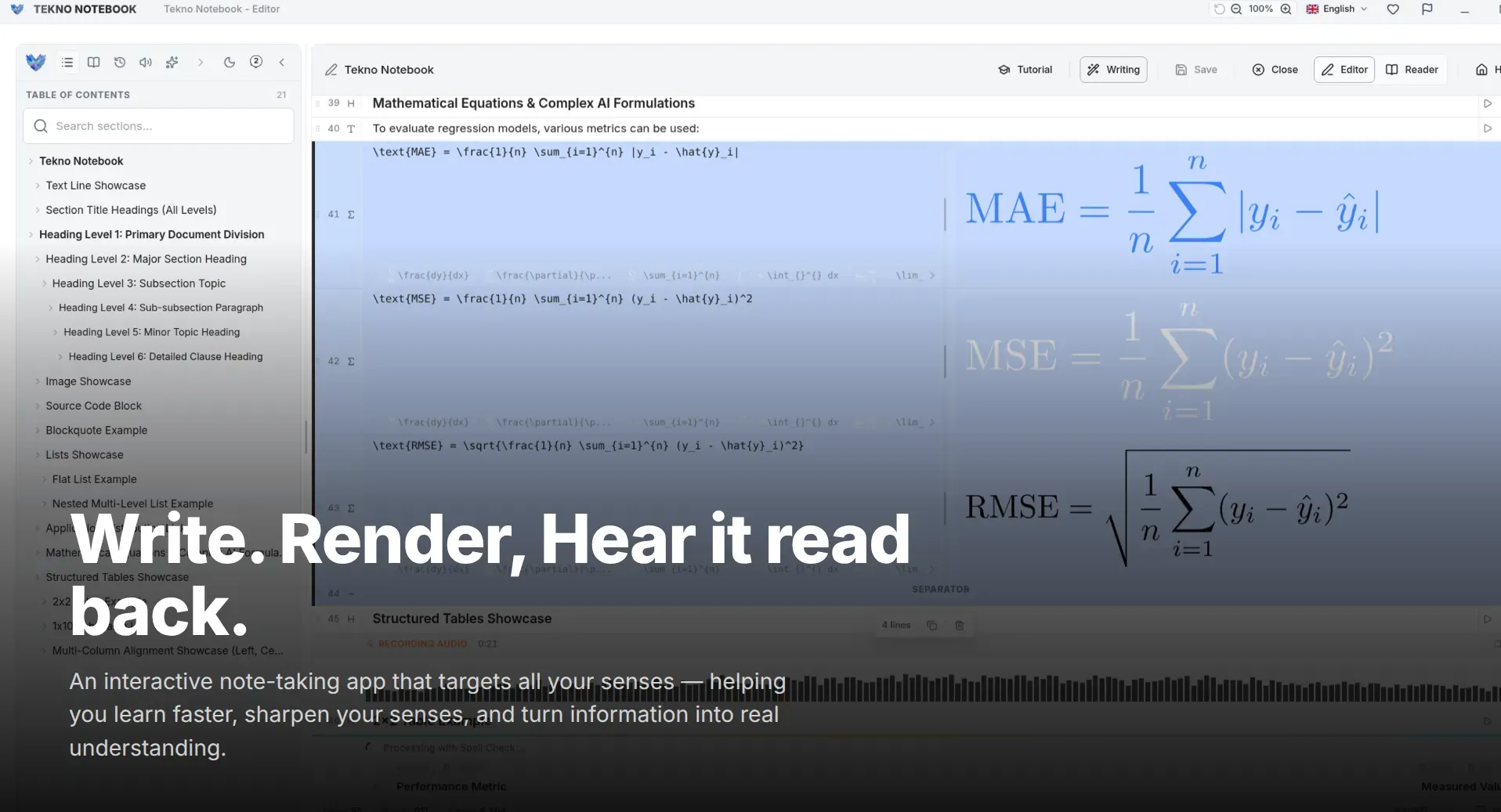
Turn Spoken Breakthroughs Into Reusable Notes
The only downside of talking through a fix is forgetting it next week—capture it as you speak.
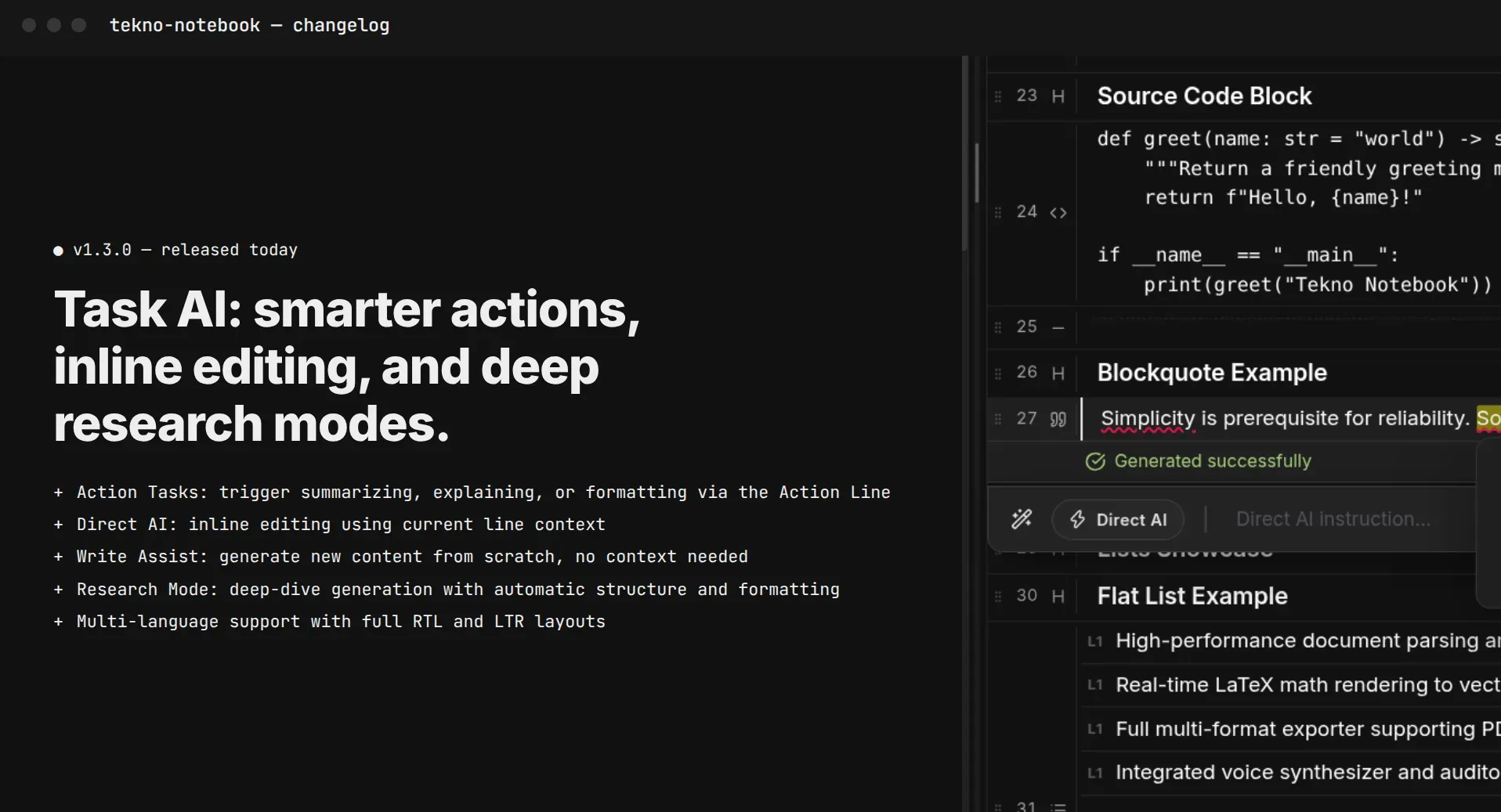
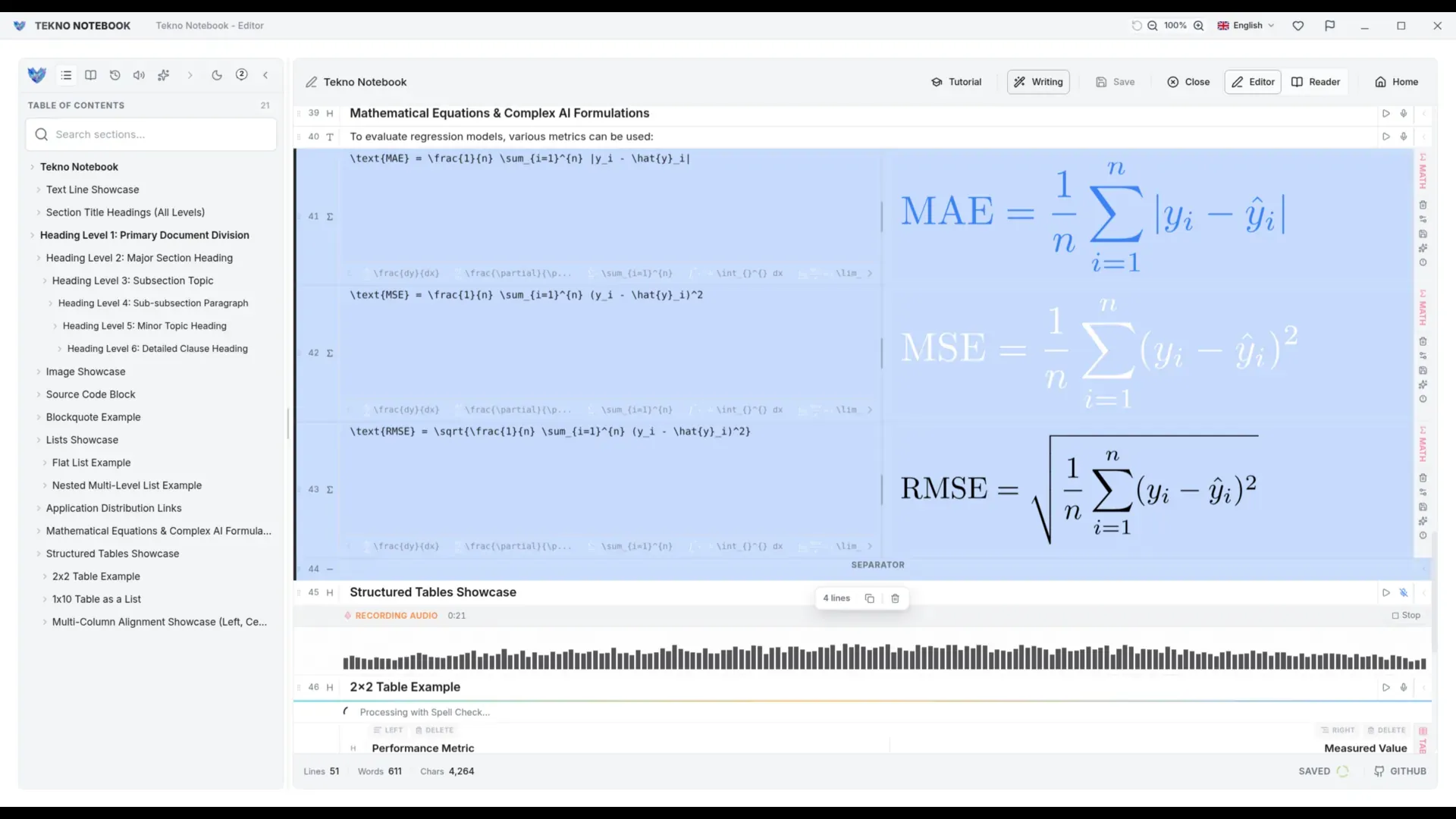
When you turn on offline Speech-to-Text inside Tekno Notebook during a rubber-duck session, your spoken walkthrough becomes a clean, searchable note where you can drop the working code snippet or equation right underneath.
- Build a personal bug-and-fix log so you never waste an hour on the same error twice. - Turn complex lectures into natural, plain-language summaries in minutes. - Keep proprietary code and private study notes completely local on your machine.
- Next time you feel stuck on a stubborn bug or a dense chapter, open a blank note, start dictating, and talk it through—you will often spot the answer before paragraph two.

Tekno Notebook
Speak Your Walkthrough and Save It as Clean Notes in Tekno Notebook
Don't let great breakthroughs vanish into thin air. Use Tekno Notebook's offline Speech-to-Text to capture spoken logic alongside code blocks and LaTeX equations.
- Offline Speech-to-Text (STT) keeps your voice and notes private
- Native support for code snippets and live LaTeX math in one page
- Smart line detection formats notes without breaking your flow
- Audio playback lets you verify your reasoning by ear