Interleaving vs. Blocked Practice: Why Mixing Study Topics Boosts Exam Scores
Spending four straight hours on one chapter creates an illusion of mastery. Learn how interleaving related topics trains your brain to pick the right method under exam pressure.
The Fluency Trap: Why Single-Topic Marathons Mislead You
Exams rarely tell you which chapter a question belongs to—your practice should reflect that.
Most students default to blocked practice: picking one chapter, solving twenty similar problems in a row, and moving on. By problem five, your brain runs on autopilot. It feels smooth and productive, yet on exam day you freeze because the questions arrive mixed together without chapter labels.
Interleaving flips that script. Instead of drilling one concept for hours, you rotate between two or three related topics within the same session. It feels slightly harder upfront, and that productive friction is exactly what strengthens long-term retention.
Research across math, science, and language learning consistently highlights three advantages:
- Blocked drills train execution of a known formula, while interleaving trains you to recognize which formula applies.
- Switching topics forces repeated retrieval from memory rather than relying on what is still warm in working memory.
- Comparing adjacent concepts side by side exposes subtle differences you would otherwise miss.
A Four-Step Interleaving Routine You Can Start Today
- Pick two or three related topics from the same course or complementary subjects.
- Work on each topic in focused 25-to-35-minute blocks before rotating to the next.
- At each switch, jot down one sentence explaining how the new concept differs from the previous one.
- Revisit the same trio two days later in a reversed order.
Keep Topic Switching Effortless, Not Chaotic
Interleaving works best when your notes are structured and instant to reach.
A study session that feels slightly challenging is usually building far stronger memory than one that feels effortless.
The biggest practical hurdle to interleaving is friction: digging through scattered folders, slow web tabs, or messy sheets breaks your concentration every time you switch. A fast, offline workspace keeps the mental shift clean.
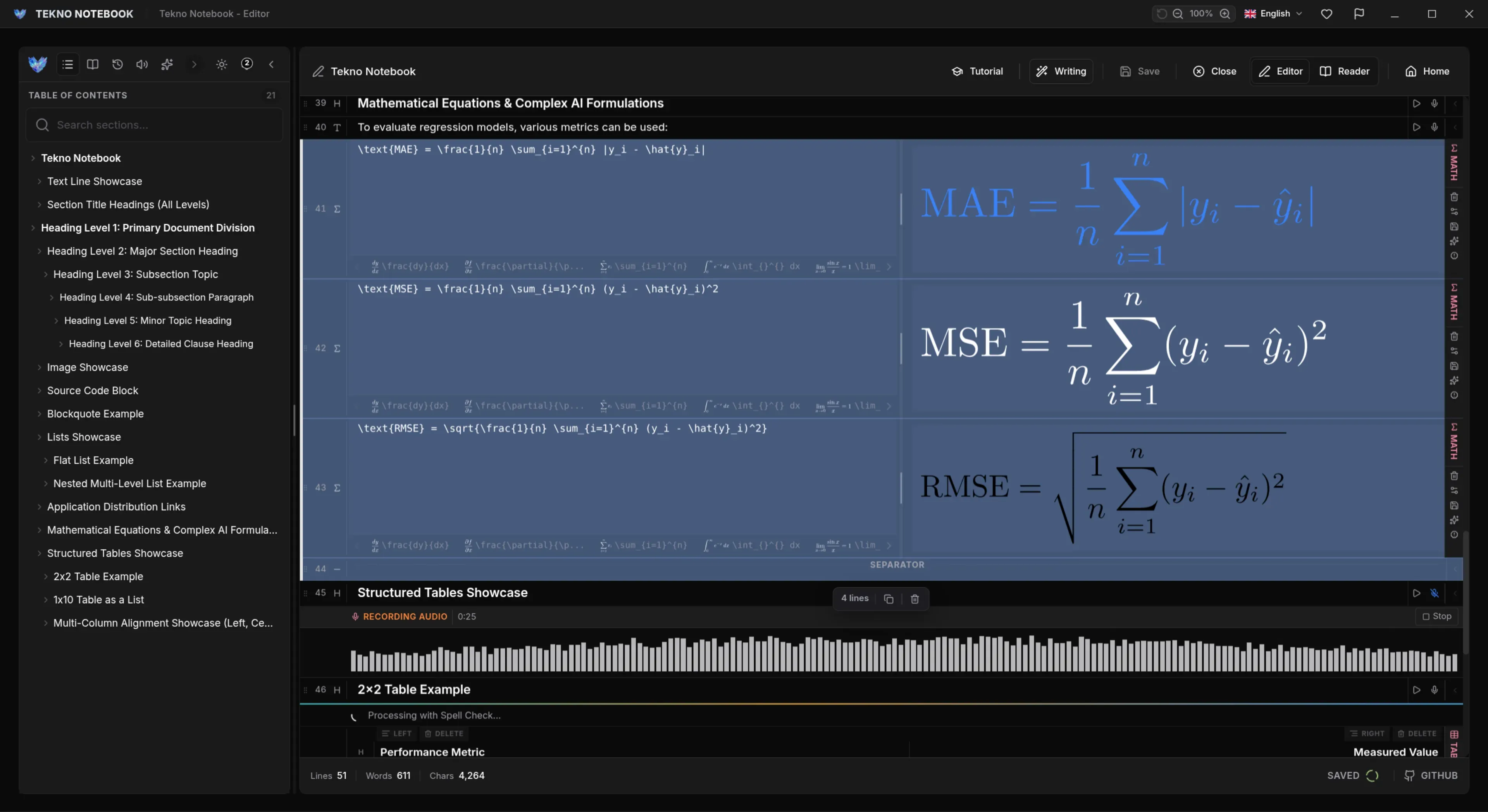
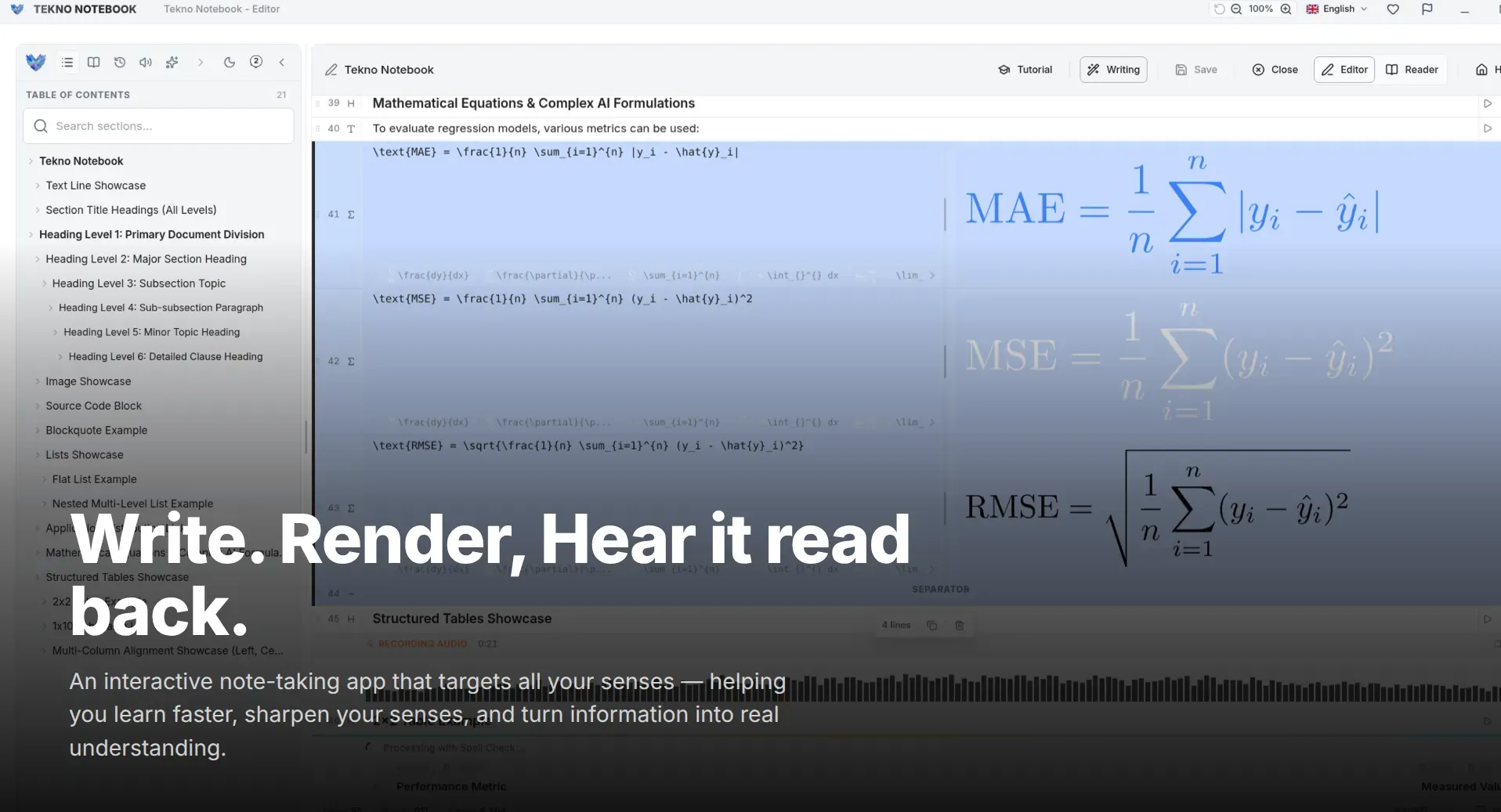
With Tekno Notebook, your formulas, structured summaries, and audio reviews sit side by side in local notebooks—so rotating between subjects takes a single click without internet distractions.
For your next two-hour study block, split the time across three related topics instead of one, and test yourself 48 hours later to feel the difference.

Tekno Notebook
Listen to Your Notes Like a Media Player and Retain Twice as Much
Transform static written notes into an interactive audio track. Tekno Notebook combines built-in Text-to-Speech, Speech-to-Text, and synchronized line highlighting in a distraction-free desktop app.
- Built-in media player with play, pause, seek, and playback speed controls
- Auto-Tracking highlights the exact sentence or line as it is read aloud
- Multilingual Text-to-Speech support including Arabic, English, Spanish, Portuguese, and Chinese
- Integrated Speech-to-Text (STT) for dictating quick insights directly into your notes