Dual Coding Theory: Why Combining Words and Simple Visuals Doubles Retention
Studying walls of plain text overloads verbal memory and fades fast. Learn how pairing concise words with simple diagrams creates two memory pathways instead of one.
How Your Brain Stores Information Through Two Separate Channels
Linking concise text with a simple visual gives your mind two independent routes to recall it.
Words alone can slip under exam pressure, but pairing an idea with a clear visual structure gives your memory two doors back to the same answer.
Cognitive psychology's dual coding theory explains that the brain processes verbal information (text and speech) and visual information (shapes, diagrams, spatial layouts) through two distinct channels. Reading dense paragraphs alone leaves half of that processing power unused.
4 Simple Steps to Use Dual Coding Without Artistic Skills:
- Read a section and isolate the core concept plus its key relationships.
- Pick the simplest matching layout: a timeline for sequences, a flowchart for processes, or a two-column matrix for contrasts.
- Sketch clean boxes, arrows, and short labels without wasting time on decoration.
- Explain the diagram back in two or three plain sentences to lock both channels together.
Common Visual Note Mistakes to Avoid
Clarity beats decoration every time—your notes are a thinking tool, not an art project.
Run through this quick checklist when building study visuals:
Within a single week of pairing concise summaries with quick diagrams, complex processes and multi-step systems become far easier to picture during exams.

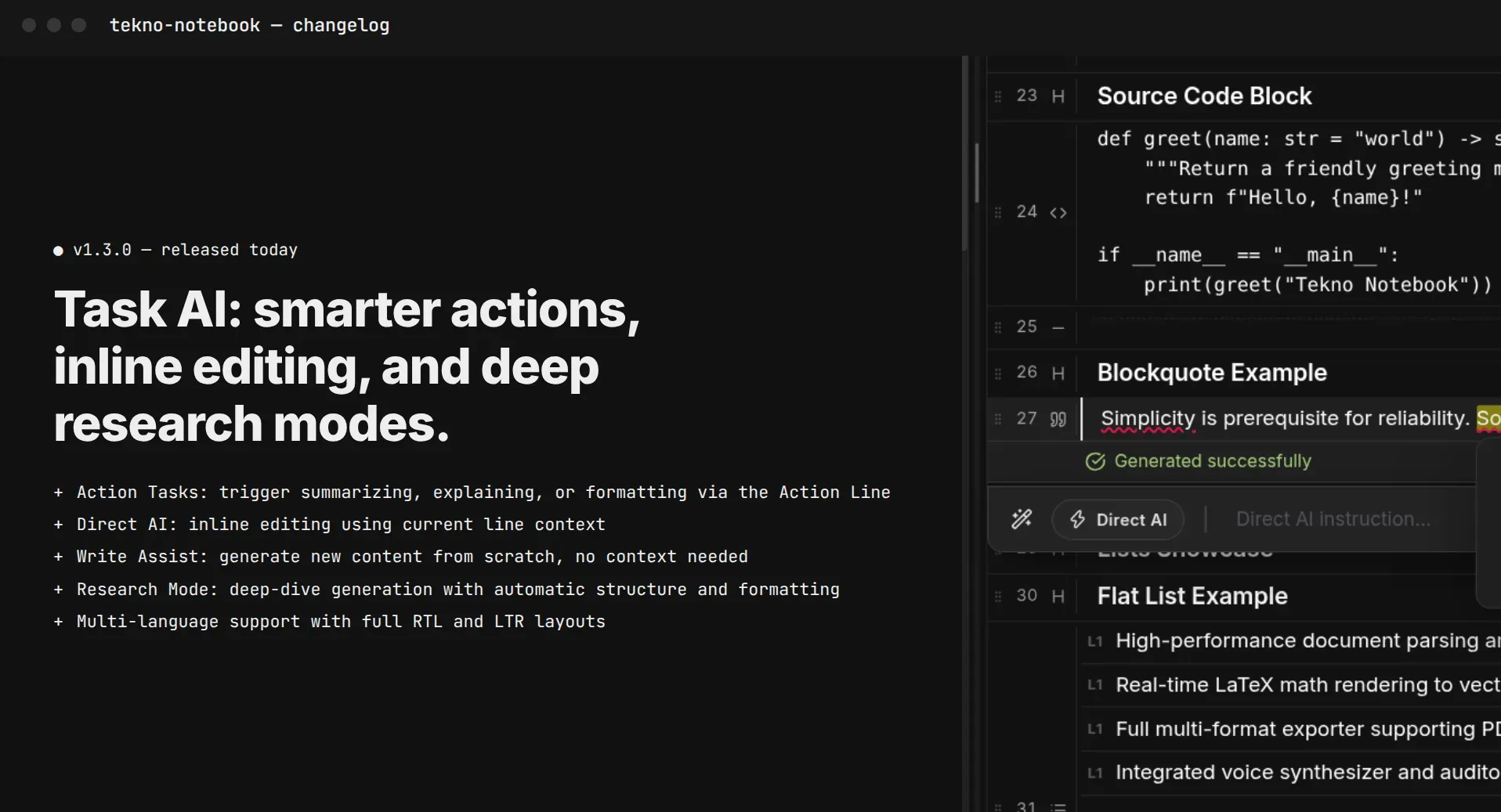
Tekno Notebook
Organize Study and Technical Notes in a Calm Workspace With Tekno Notebook
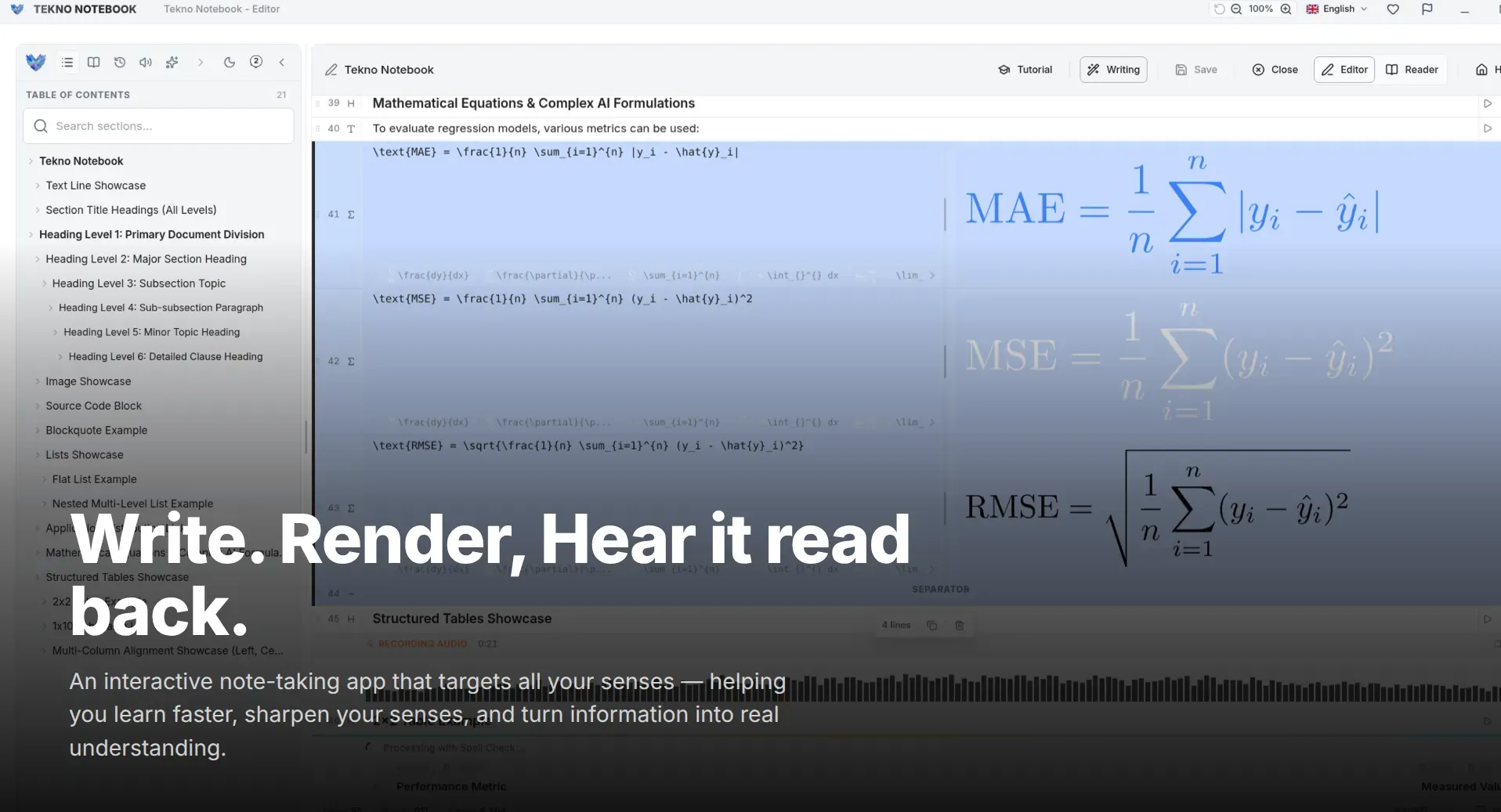
A local, offline-first desktop note-taking app supporting fast formatting, code snippets, live LaTeX math, and built-in audio reading and dictation.
- Works 100% offline with full control over your local files
- Fast keyboard editing with code blocks and live LaTeX equations
- Built-in local Text-to-Speech (TTS) and Speech-to-Text (STT)
- Clean export to PDF, Markdown, and LaTeX