The Best Way to Learn a New Language: Listen, Speak, Review, Repeat
Language apps are booming, but a streak isn’t fluency. Use a simple loop of listening, speaking, and spaced review, and keep your own sentences in Tekno Notebook with dictation and audio playback.
Apps Get You to Open the Lesson. Fluency Needs More.
A streak measures habit, not ability.
Language apps keep growing: Duolingo reported that its daily active users rose 29 percent to 64.9 million in the third quarter, and said AI video calls now reach all its Super subscribers. Daily practice is a great habit. But finishing lessons and following a real conversation are different skills.
Learning research keeps pointing to the same ingredients: plenty of listening and reading you mostly understand, regular speaking, and review spaced over time. The weak spot in many apps is the middle one. You recognize a word on screen, but you haven’t yet pulled it out of your own head and said it aloud.
Three Habits That Build Real Fluency
1. Listen Before You Perfect
Spend part of every session on audio you can mostly follow: slow podcasts, short videos with subtitles, graded readers. Replay a clip until you catch every sentence. Understanding grows from hearing the language at your level, not from memorizing lists.
2. Speak From Day One, Even Badly
Say sentences aloud, talk to an AI voice partner or a human tutor, and record yourself. Mistakes are the useful part, because each one shows what to fix. A human partner also catches errors a chatbot may let slide.
3. Review Your Own Sentences
Keep a notebook of sentences you actually said, heard, or were corrected on, then revisit them after a day, a week, and a month. A word inside a sentence you made yourself tends to stick better than an isolated flashcard.
A 30-Minute Daily Loop
Small enough for a busy day, balanced enough to train every skill.
- Minutes 0-10: listen to a short clip and replay the hardest sentences.
- Minutes 10-15: write five useful sentences from it in your own notes.
- Minutes 15-22: say them aloud, or practice with a partner, tutor, or AI voice.
- Minutes 22-27: dictate a short paragraph about your day in the new language.
- Minutes 27-30: mark your mistakes and schedule those sentences for review.
Fluency is built by using the language, not by finishing the lesson.
A Notebook for Your Own Sentences
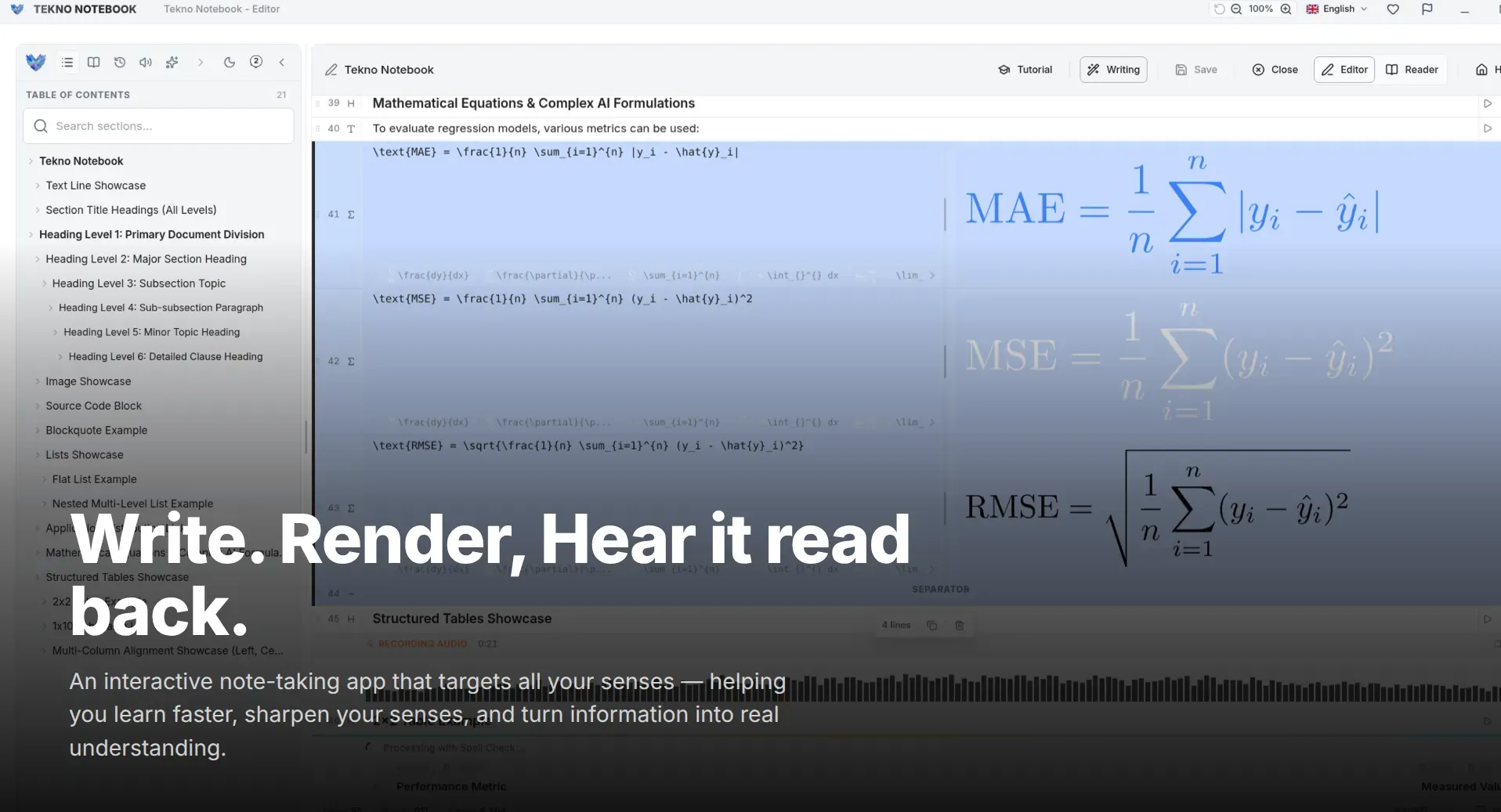
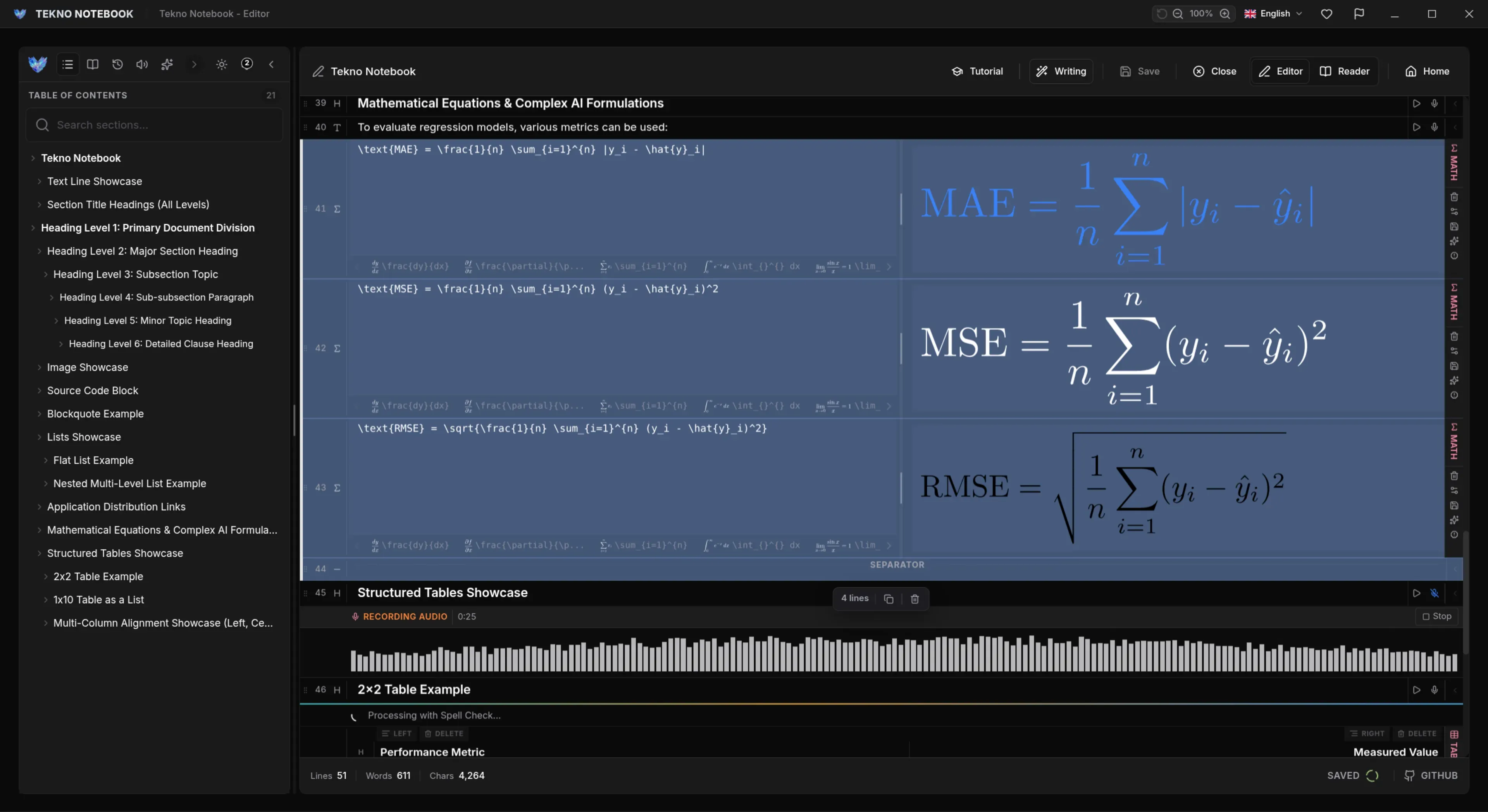
Tekno Notebook keeps your sentences as plain files on your device. Dictate in the language you are learning, then play your notes back with the audio reader and its offline AI voices, which highlights each line as it is spoken, so you can repeat after it. Use the built-in AI assistant to turn a page of sentences into practice questions. Paste this prompt with your notes:
Here are sentences I am learning in [language]: [paste sentences].
Quiz me one at a time: show the sentence in my native language and ask me to say it in [language].
Wait for my answer. Then correct it, explain the mistake briefly, and ask a follow-up.
Repeat the ones I miss at the end.
Ready to try it? Explore the Tekno Notebook project page (/en/project/TeknoNotebook). Keep reading: Studying in a Second Language: A Notes System for Vocabulary, Listening, and Writing (/en/blog/study-in-a-second-language-notes-audio-dictation) and Offline AI Voices: Turn Your Notes into Audio You Can Listen to Anywhere (/en/blog/offline-ai-voices-turn-notes-into-audio).

Tekno Notebook
Dictate, listen, and review in one notebook
A free offline desktop notebook with speech-to-text dictation, synchronized audio playback with offline AI voices, and a built-in AI assistant, made for learners who want to capture fast and review smart.
- Speech-to-text dictation to practice writing in the language you are learning
- Audio reader with offline AI voices that highlights each line as it is spoken
- Built-in AI assistant to turn your sentences into practice questions
- Notes saved as plain files on your device, with no account and no tracking