AI Temperature & Top-P Explained: Why Asking the Exact Same Question Gives Different Answers
Ever paste the exact same prompt twice and get two completely different replies? Learn how temperature and Top-P sampling control AI randomness—and how to lock in consistency.
Why Does AI Never Give the Exact Same Reply Twice?
Every word is drawn from a probability list—and Temperature decides how adventurous the pick is.
Traditional software is deterministic: same input, same output. Language models work differently. At every single word, the model calculates probabilities for thousands of candidate next tokens and rolls a weighted die. Two hidden dials—Temperature and Top-P—control whether the model sticks strictly to the safest top word or takes creative risks on less likely phrasing.
4 Practical Rules to Control Consistency vs. Creativity
# Quick Guide to AI Creativity Settings
Temperature = 0.0 - 0.2  -> Strict, repeatable (code, math, summaries)
Temperature = 0.7        -> Balanced (everyday writing & study Q&A)
Temperature = 1.0+       -> Creative & unpredictable (brainstorming)

# Even without sliders, anchor consistency in your prompt:
"Use a strict 3-bullet format. State only verified facts from the text below." 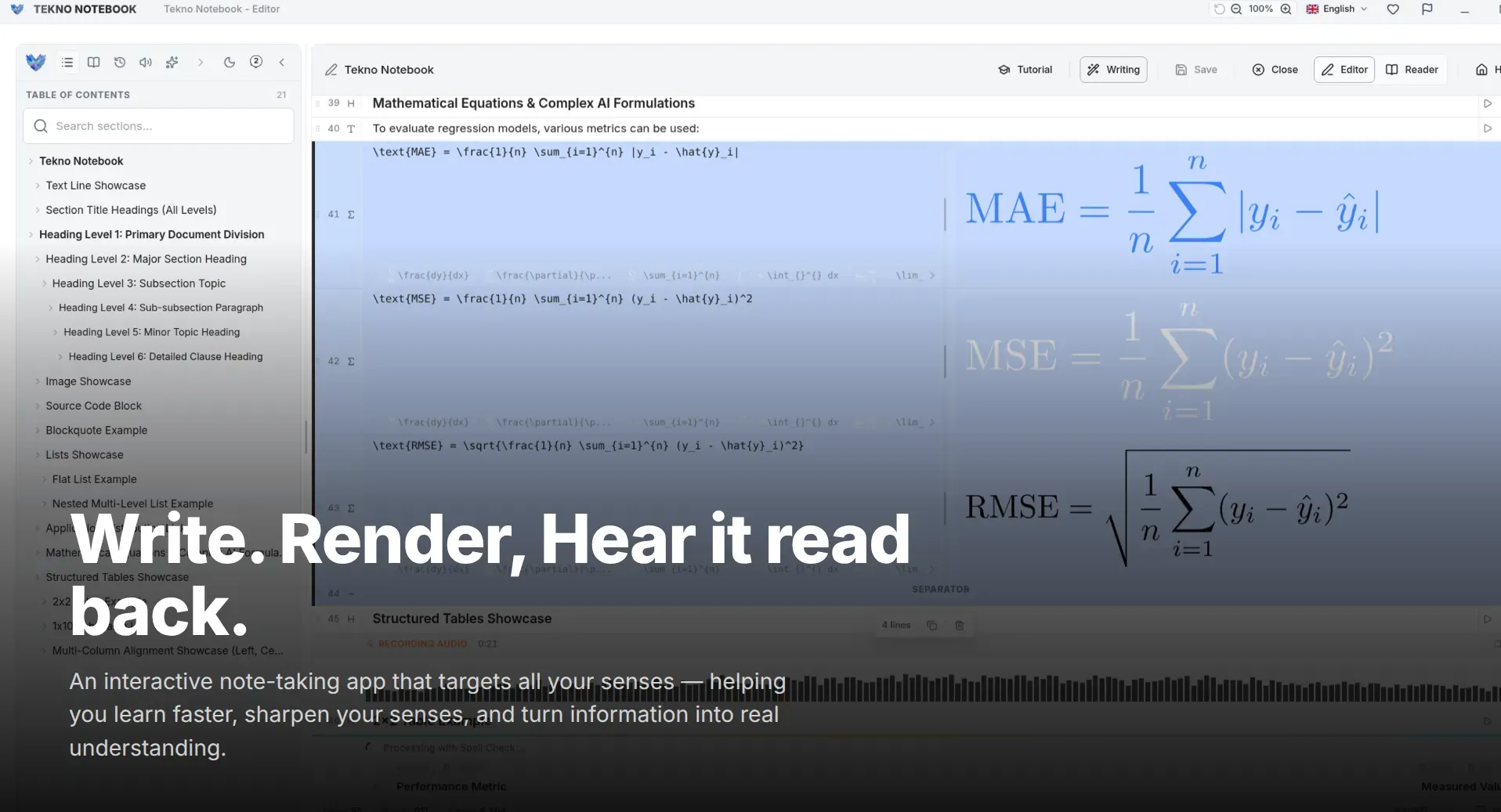

Debug Your Prompts Once, Reuse Them With Confidence
One tightly structured template beats rolling the dice ten times in a row.
Testing your phrasing inside Tekno Notebook's built-in AI prompt debugger lets you see how a single constraint tightens reliability—then save the winning template right beside your offline notes and code.
Randomness in AI is not a bug—it is a creative dial once you know when to turn it down for accuracy and up for ideas.

Tekno Notebook
Test Prompt Consistency and Archive Your Best Templates in Tekno Notebook
Use Tekno Notebook's built-in AI prompt debugger to refine clear, repeatable prompts—and keep your verified study notes, code, and outputs neatly stored offline.
- Built-in AI system and prompt debugger for repeatable tasks
- Save proven prompt templates locally for instant reuse
- Native support for code blocks and LaTeX math on one page
- Clean Markdown and PDF export once results are verified