The Von Restorff Effect: Why Your Brain Remembers One Weird Fact Better Than Ten Normal Pages
Highlighted half your textbook in bright yellow and still forgot it? Learn how the Isolation Effect works—and how strategic contrast makes key study facts unforgettable.
Why Highlighting Half the Page in Yellow Actually Ruins Your Memory
When everything looks emphasized, your brain treats the entire page as uniform background noise.
Your brain tunes out rows of identical text—but immediately locks onto the single item that breaks the pattern.
In 1933, psychologist Hedwig von Restorff discovered the Isolation Effect: when one item in a uniform list stands out visually or conceptually, people remember it dramatically better than everything around it. That is why painting 70% of a chapter with neon highlighters backfires—you erase the contrast that memory relies on.
4 Practical Ways to Use the Von Restorff Effect in Your Notes
- Follow the 10% Rule: visually emphasize no more than one core rule or two key lines per page.
- Isolate common exam traps and exceptions inside a standalone callout or quote block.
- Pair dry definitions with one quirky, unexpected real-world example—unusual details stick fast.
- Surround key formulas with generous whitespace so they stand out like islands on the page.

Turn Plain Study Notes Into High-Contrast Memory Anchors
Clean structure takes seconds and works like a spotlight on your toughest exam points.
Instead of drowning notes in random colors, two built-in strengths in Tekno Notebook apply the Isolation Effect naturally:
1. Separate Formulas and Code From Everyday Prose
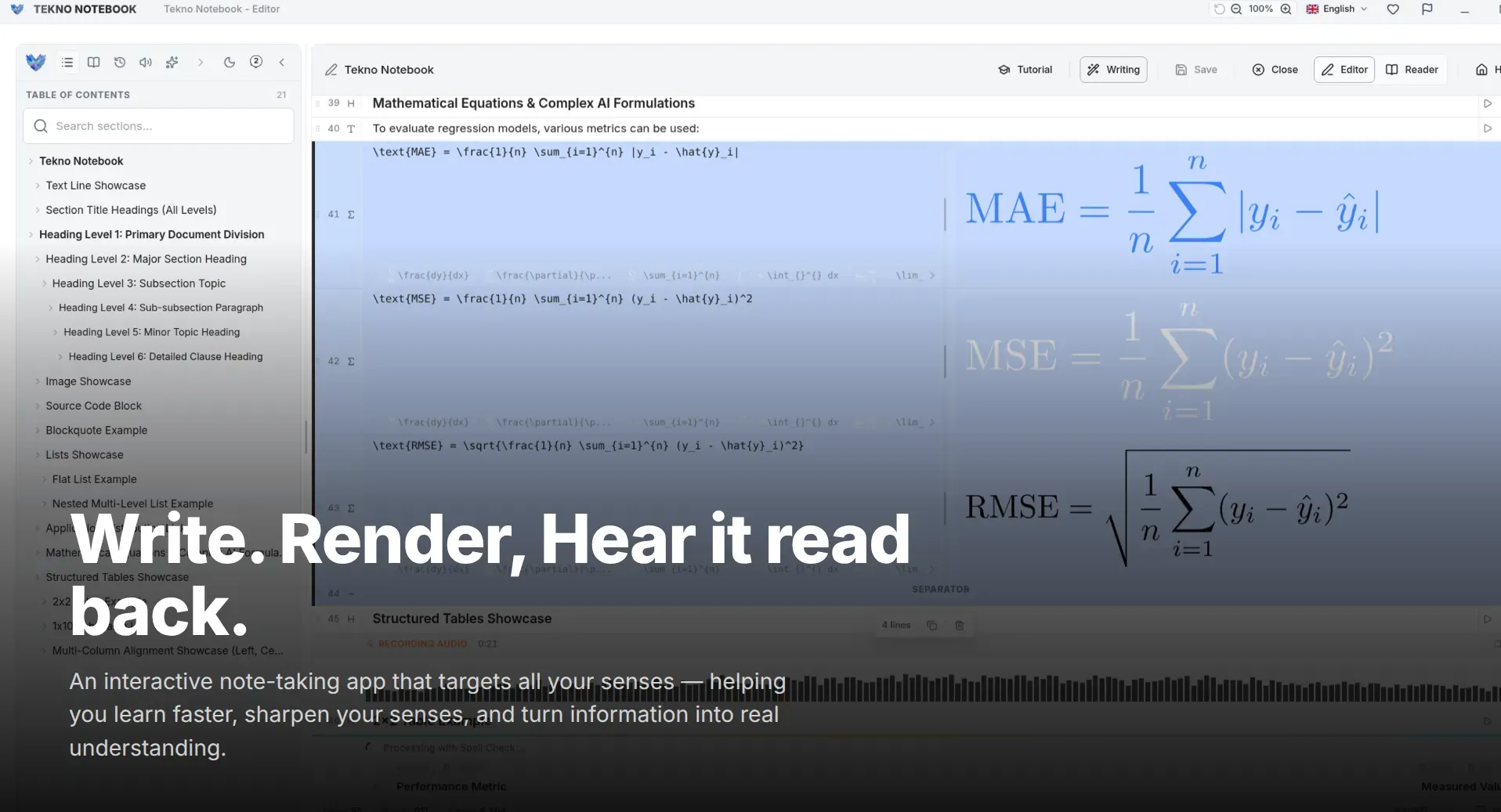
With smart line detection, code blocks, and live LaTeX in Tekno Notebook, your core equation or rule automatically stands apart from surrounding explanations.
2. Review in Clutter-Free Reader Mode
Switching to Reader Mode strips away editing toolbars so the few isolated anchors you marked stay vivid in your visual memory on exam day.

Tekno Notebook
Make Key Formulas and Exam Traps Stand Out Cleanly in Tekno Notebook
Tekno Notebook isolates headings, code snippets, and LaTeX equations automatically—paired with a calm Reader Mode that makes critical facts impossible to miss.
- Smart line detection isolates headings, code, and callouts fast
- Reader Mode gives isolated key points clean visual breathing room
- Live LaTeX rendering makes core formulas pop off the page
- 100% offline with crisp PDF and Markdown export