The Production Effect: Why Speaking Notes Aloud Makes Memory Stick
Silent reading feels effortless—and fades just as fast. Discover the Production Effect in memory science and how speaking, writing, and listening multiply what you remember.
Why Your Own Voice Leaves a Deeper Memory Trace
What the Production Effect is—and why active output beats silent scanning.
Read twenty new terms silently, then read another twenty aloud, and test yourself later: the spoken set almost always wins by a wide margin. Memory researchers call this the Production Effect. Actively producing information—by speaking it, typing it in your own words, or writing it—makes it far more distinctive in memory than silent reading alone.
The reason is multisensory encoding. When you say an idea out loud, your brain combines visual recognition with motor speech movements and the sound of your own voice. Those extra cues act like bright tags when you need to retrieve the answer on exam day.
Three Ways to Use the Production Effect While Studying
1. Speak the Hardest Concepts Aloud
You do not need to read an entire textbook out loud. Target definitions, formulas, and tricky steps you keep forgetting. Speaking a key paragraph clearly once often outperforms reading it silently three times.
2. Explain Concepts Out Loud Into Written Notes
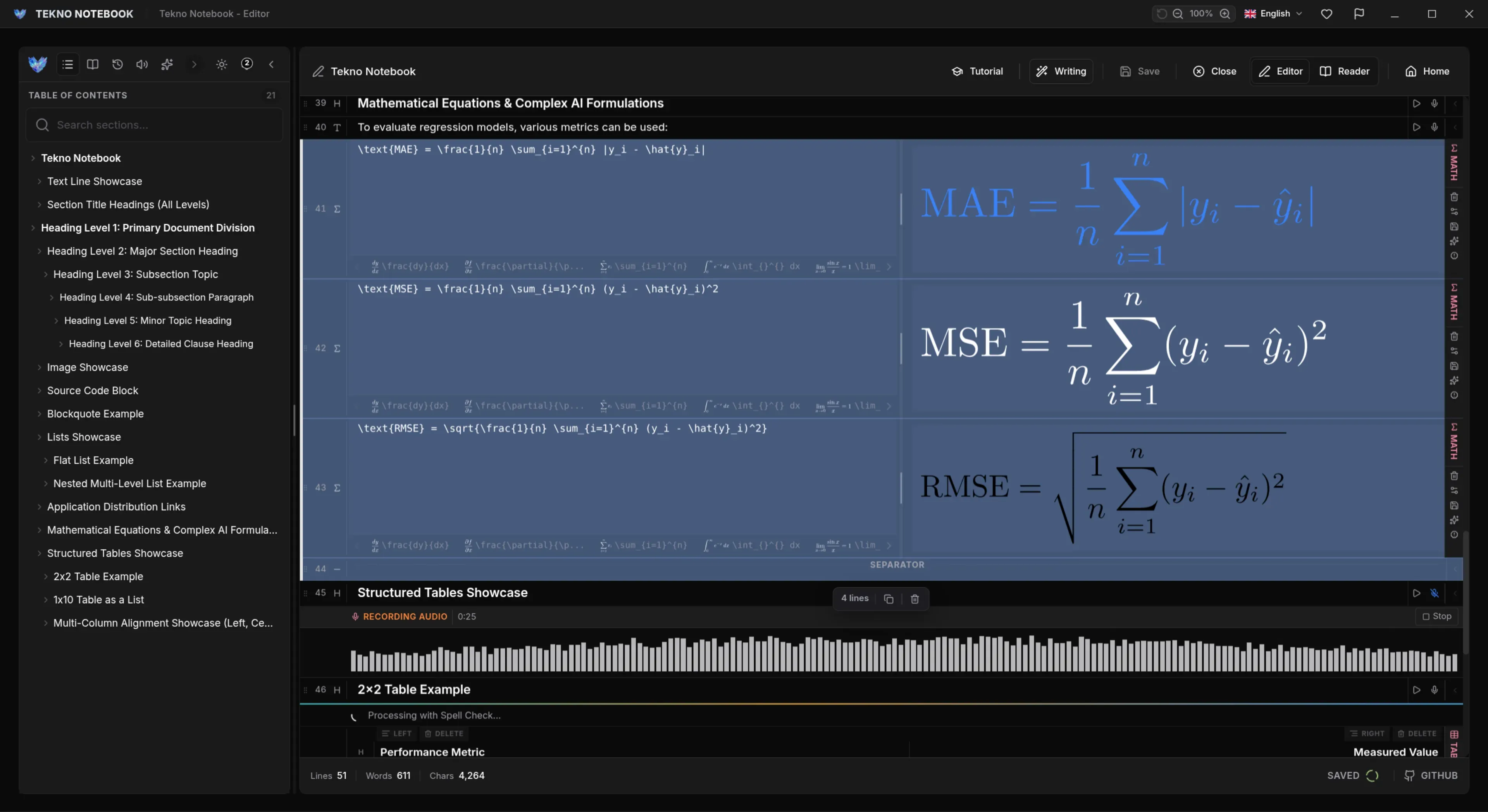
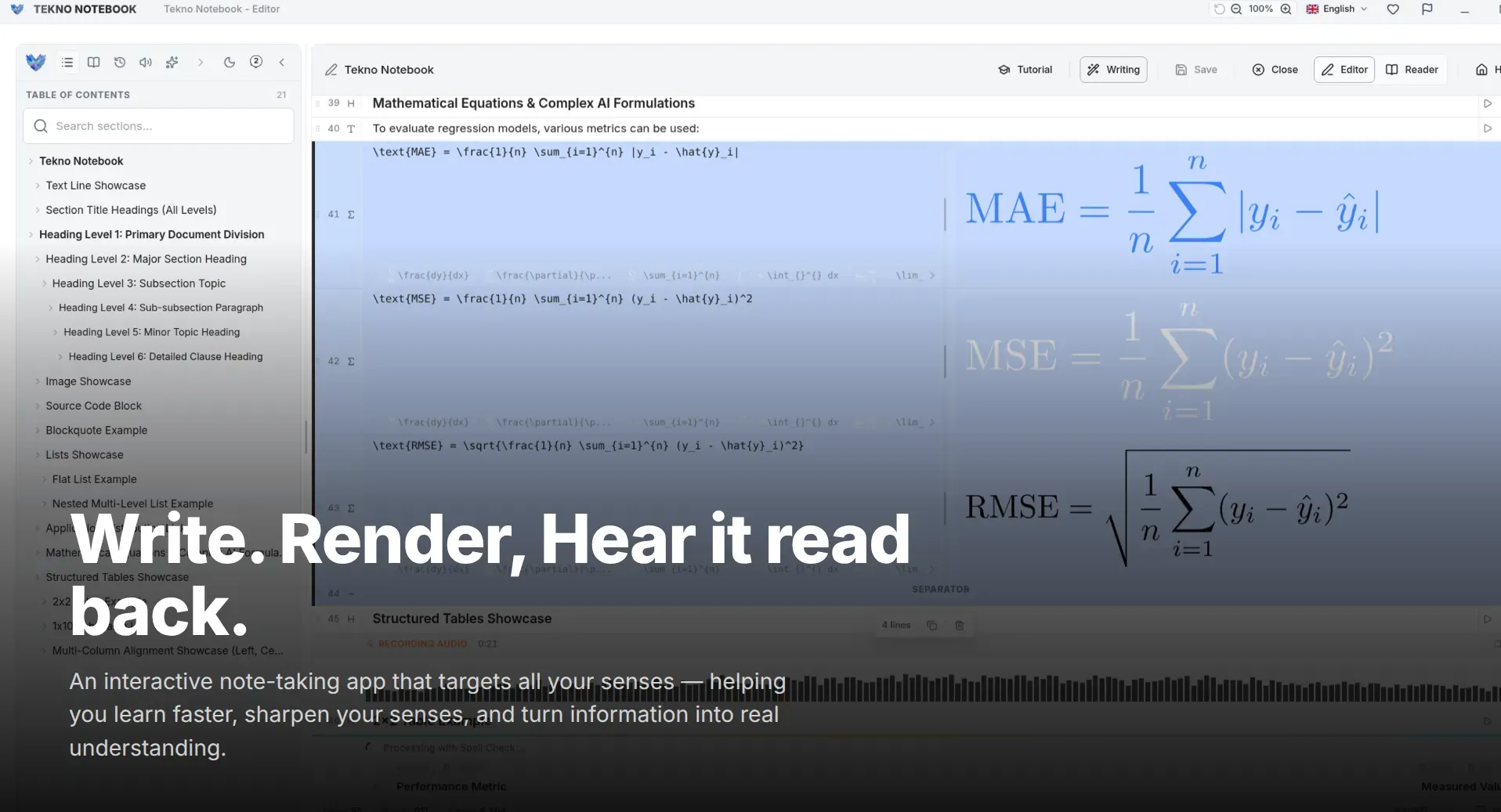
The strongest form of production merges speech with paraphrasing: look away from the page and explain the concept in your own words. Using voice dictation in Tekno Notebook turns your spoken explanation straight into structured study notes.
3. Reinforce Recall With Synchronized Audio Playback
Once your summary is captured, listen back while following along visually. Tekno Notebook's offline audio reader highlights every line as it is spoken, pairing visual and auditory channels for lighter, stickier review.
Five Practical Ways to Apply the Production Effect
Small shifts that dramatically raise retention without extra hours.
- Pick the toughest 20% of each chapter and read those points aloud instead of silently.
- Use voice dictation to summarize a section in your own words right after finishing it.
- When studying a new language, speak full sentences aloud rather than scanning vocabulary lists.
- Listen to your summaries during evening review while following the highlighted lines.
- Combine speaking and writing whenever you miss a practice question so the fix sticks.
Eyes glide quickly over familiar words; your voice and your own phrasing leave a mark memory can actually find.
Turn Your Voice Into a Daily Study Tool
The best part of the Production Effect is that it takes no extra study time—just a shift from passive scanning to active output. Speak the idea, capture it, and hear it back.
Tekno Notebook brings offline voice dictation and synchronized audio playback together in one free desktop app, letting you move smoothly between speaking, writing, and listening.
In your next session, try speaking the five most important takeaways aloud in your own words—you will notice how much faster they come back when you test yourself.

Tekno Notebook
Combine Voice Dictation and Audio Review in One Notebook
A free offline desktop notebook pairing speech-to-text dictation with synchronized audio playback so your notes engage sight, speech, and hearing together.
- Fast voice dictation captures spoken explanations as clean text
- Offline audio reader highlights each line as it speaks
- Works completely offline with zero account required
- Ideal for terminology, languages, and dense exam concepts

