Passkeys vs. Traditional 2FA: A Practical Guide to Everyday Account Security
Passwords alone are no longer enough. Learn how passkeys stop phishing attacks, why app-based codes beat SMS, and how to document recovery steps safely offline.
Why Traditional Passwords Keep Losing to Phishing
Modern account protection relies on cryptography bound to the real website, not memory.
Most account takeovers do not happen because someone guessed a password—they happen because a convincing fake login page tricked a user into typing both their password and their one-time code. Even careful people fall for lookalike domains when they are rushed or tired.
Passkeys solve that exact weakness. Built on public-key cryptography, a passkey stays locked inside your device and only signs in when the browser confirms the exact real domain. If you accidentally open a phishing clone, the passkey simply refuses to respond.
Three Layers of Stronger Everyday Account Security
1. Enable Passkeys Wherever Supported
Start with your primary email, cloud accounts, and banking portals. A passkey unlocks with your fingerprint, face, or device PIN, removing both weak passwords and manual code typing in one step.
2. Switch From SMS Codes to Time-Based Authenticator Apps
When a service does not support passkeys yet, prefer an authenticator app or hardware key over text messages. SMS codes can be intercepted through SIM-swap attacks or delayed when traveling.
3. Prepare an Offline Recovery Plan Before You Lose Your Phone
Strong security has one hidden risk: locking yourself out if your phone is lost or damaged. Every critical account gives you single-use backup recovery codes during setup—and those codes should never sit in random screenshots or chat histories.

Five Habits to Stay Protected Without Getting Locked Out
Simple rules that keep your accounts resilient and recoverable.
- Protect your primary email first; it is the master key to resetting every other account.
- Register at least two sign-in methods—such as a phone passkey plus a laptop passkey—so losing one device never locks you out.
- Never save recovery instructions in public chat drafts or unencrypted cloud folders.
- Review active login sessions on your main accounts twice a year and revoke old devices.
- Keep a clean, offline security log of which accounts use passkeys, authenticator apps, or backup keys.
Security only works when it is easier to use every day than the bad habits it replaces.
Documenting Your Recovery Routine Offline
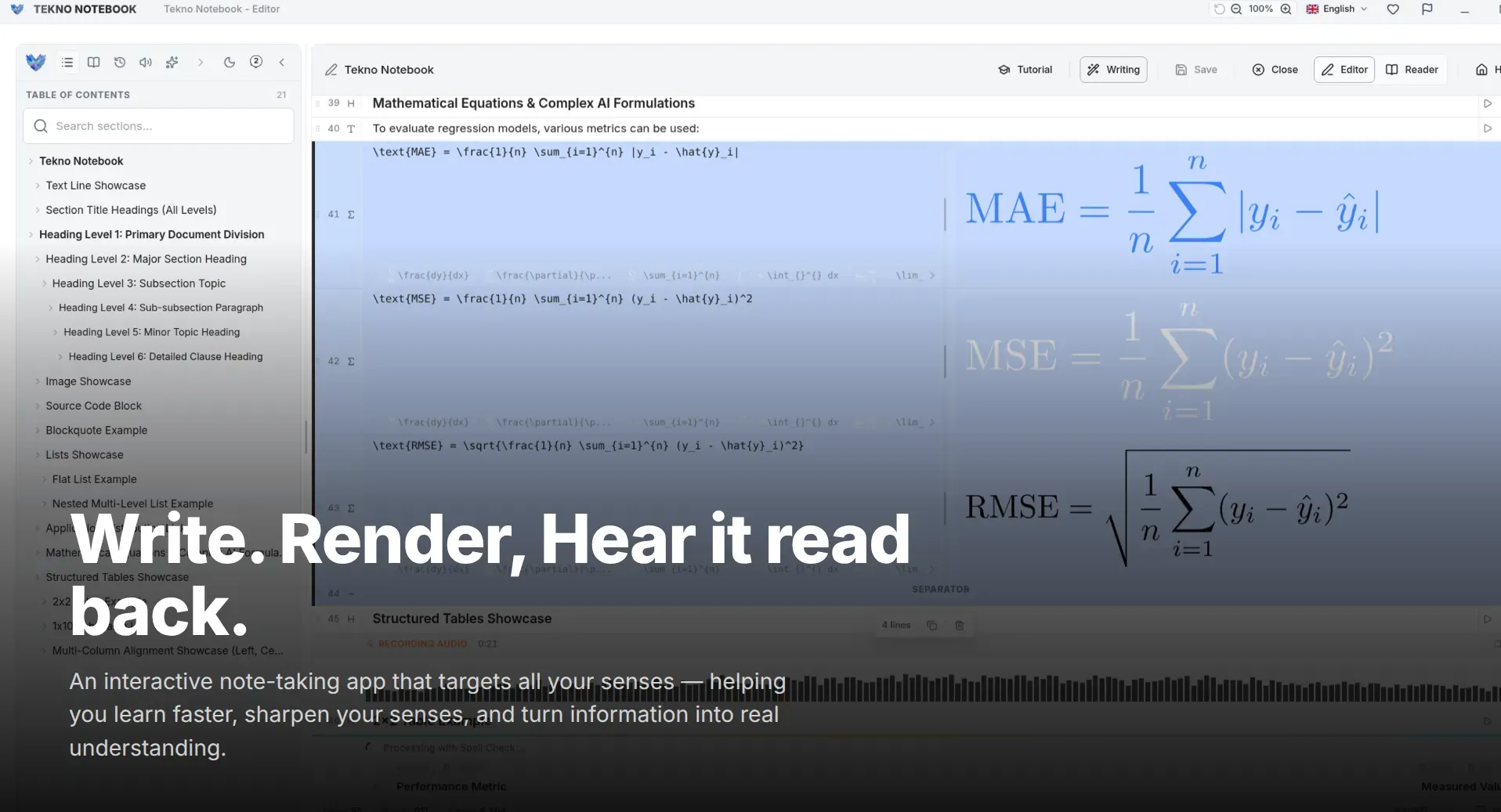
Keeping a personal security inventory—which accounts are protected, where your backup codes are stored physically, and what steps to follow if a phone disappears—does not belong on a third-party cloud server. Writing and organizing your recovery checklist in Tekno Notebook keeps that documentation strictly offline on your own computer, searchable in seconds and exportable to a printable PDF you can lock in a safe place.
Pick your top three accounts today, upgrade them to passkeys or app-based 2FA, and write down a clear offline recovery checklist while everything is still fresh.

Tekno Notebook
Listen to Your Notes Like a Media Player and Retain Twice as Much
Transform static written notes into an interactive audio track. Tekno Notebook combines built-in Text-to-Speech, Speech-to-Text, and synchronized line highlighting in a distraction-free desktop app.
- Built-in media player with play, pause, seek, and playback speed controls
- Auto-Tracking highlights the exact sentence or line as it is read aloud
- Multilingual Text-to-Speech support including Arabic, English, Spanish, Portuguese, and Chinese
- Integrated Speech-to-Text (STT) for dictating quick insights directly into your notes
