The Illusion of Explanatory Depth: Why You Think You Understand Something Until You Write It Out
Can you explain step by step how a zipper, bicycle, or HTTPS connection actually works? Discover the cognitive bias that fools students and engineers—and a 3-minute test to beat it.
Why Familiarity Feels Identical to Mastery—Until You Try to Explain
In classic psychology experiments, people confidently rated their knowledge of everyday objects high—until asked to sketch the mechanism.
Cognitive researchers call this the Illusion of Explanatory Depth: humans consistently overestimate how well they understand complex systems—from bicycles and zippers to networking protocols and physics laws. Watching a polished lecture makes every step feel obvious, fooling your brain into confusing familiarity with actual mechanistic knowledge.
3-Minute Depth Audit Checklist
## 3-Minute Depth Audit
- Concept: How HTTPS encrypts traffic
- Step 1 (Trigger): Browser requests secure connection...
- Step 2 (Mechanism): ??? <-- Gap spotted! Look this up.
- Step 3 (Outcome): Symmetric session key encrypts data.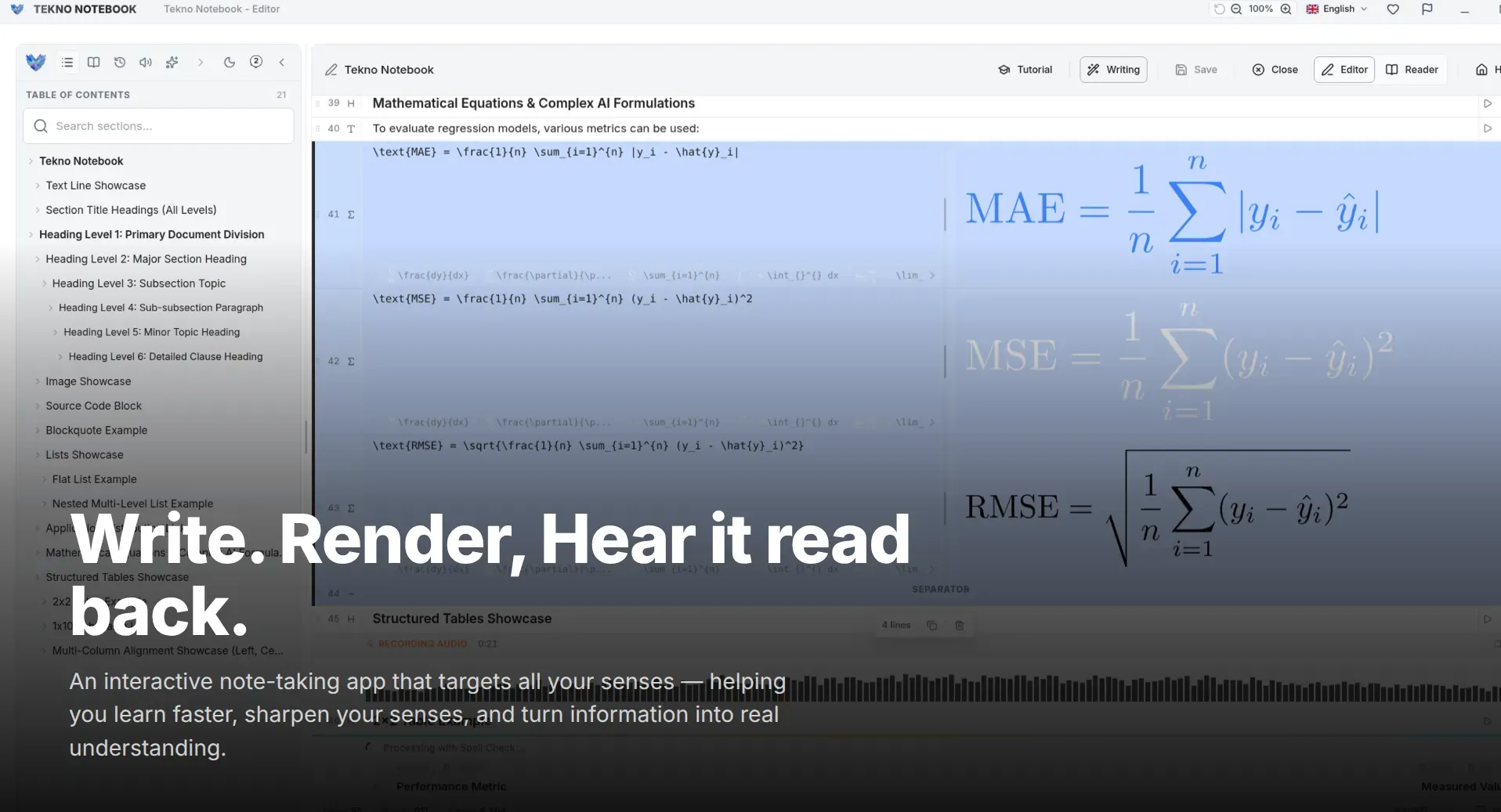
4 Moments When the Illusion Hits Hardest
- Right after watching a smooth explainer video that hides all the hard work.
- Nodding along while reading a solved problem instead of solving it yourself.
- Collecting polished summaries without reconstructing the logic in your own words.
- Using impressive technical jargon without tracing how one component drives the next.
Expose Hidden Gaps Before Exam Day or Technical Interviews
A blank note is the most honest mirror of what you truly understand.
Open a clean page in Tekno Notebook and type or dictate the exact chain of cause and effect alongside the formula or code snippet. The exact line where you stall is the exact gap worth studying.
If you cannot trace the arrow from step one to the final outcome without skipping, you do not know the mechanism yet—only its name.

Tekno Notebook
Turn Vague Familiarity Into Clear Step-by-Step Explanations in Tekno Notebook
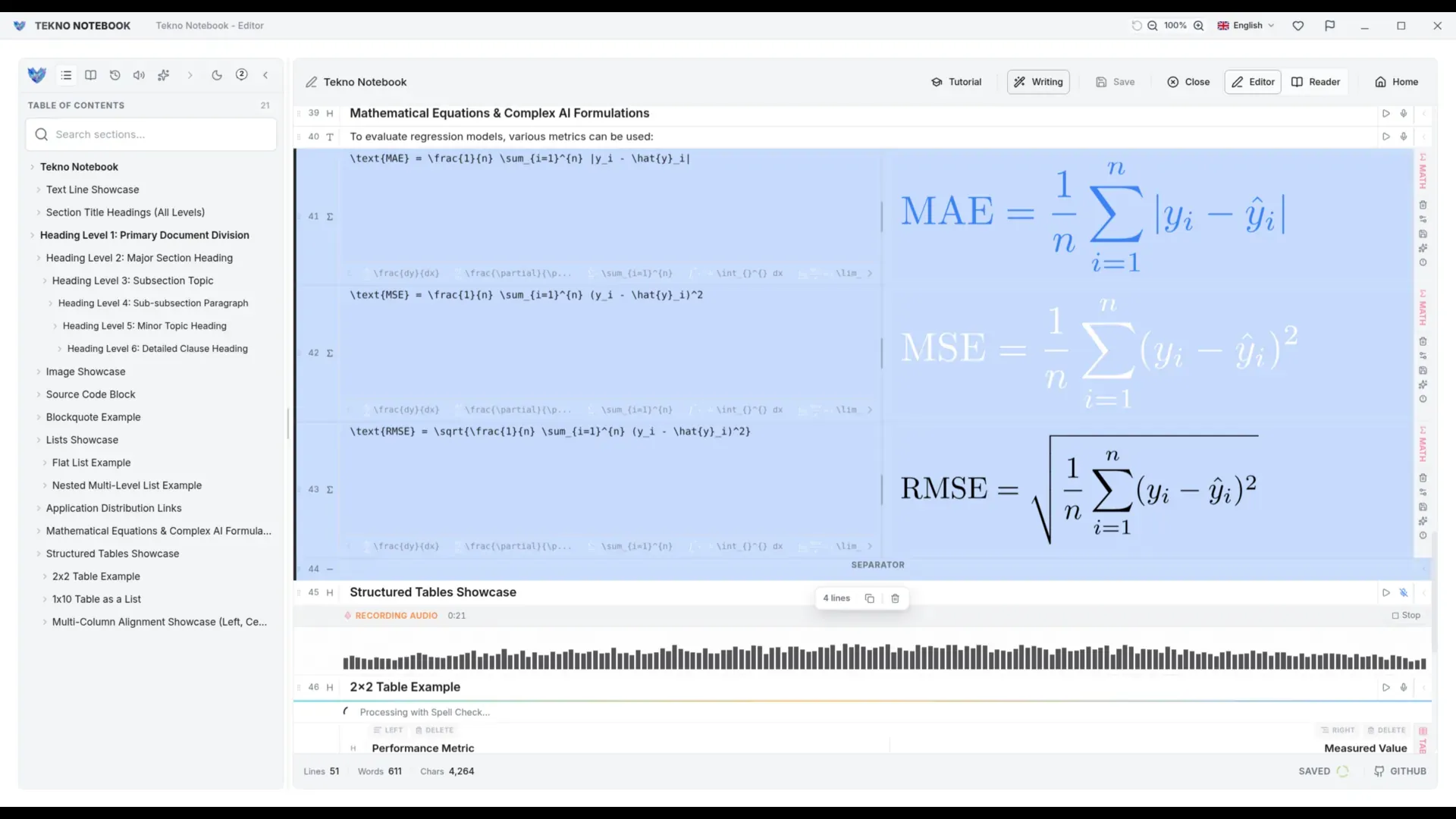
Write or dictate how any system or concept works inside Tekno Notebook—combining plain text, code blocks, and live LaTeX offline to expose gaps immediately.
- Offline Speech-to-Text reveals hesitation the instant you hit a gap
- Live LaTeX math and code blocks sit right beside your prose
- Audio playback lets you hear whether your logic actually flows
- Clean Markdown and PDF export preserves your verified explanations