How to Memorize Math and Physics Formulas Fast Without Blankouts on Exam Day
Keep mixing up signs, fractions, and symbols under exam pressure? Learn 5 practical methods—from unit checks to clean formula sheets—that lock equations in for good.
Why Copying Formulas Twenty Times Still Fails Under Exam Stress
Your brain drops abstract symbol strings quickly, yet holds onto physical meaning and units effortlessly.
A formula whose units make sense—and whose shape you can derive in two lines—will never desert you in an exam hall.
Many students try to memorize thirty physics or calculus equations as if they were random passwords. One flipped sign or inverted fraction wrecks the entire problem. Turning symbols into plain relationships solves the root cause.
5 Practical Ways to Lock In Math and Physics Formulas Fast
- Translate every equation into one plain sentence first (e.g., doubling mass requires double the force for the same acceleration).
- Use dimensional analysis (unit checking) to verify instantly whether a variable belongs on top or bottom.
- Memorize the single 'parent' equation and practice deriving its variations in two quick steps.
- Solve three graded problems right after writing the formula—active application beats staring by tenfold.
- Collect each chapter's equations onto one clean sheet alongside the exact conditions where each applies.
Build a Crystal-Clear Formula Sheet You Actually Enjoy Reviewing
Typing your own equations cleanly turns messy lecture scribbles into a sharp visual anchor.
1. Type Equations Fast Without Clunky Syntax Friction
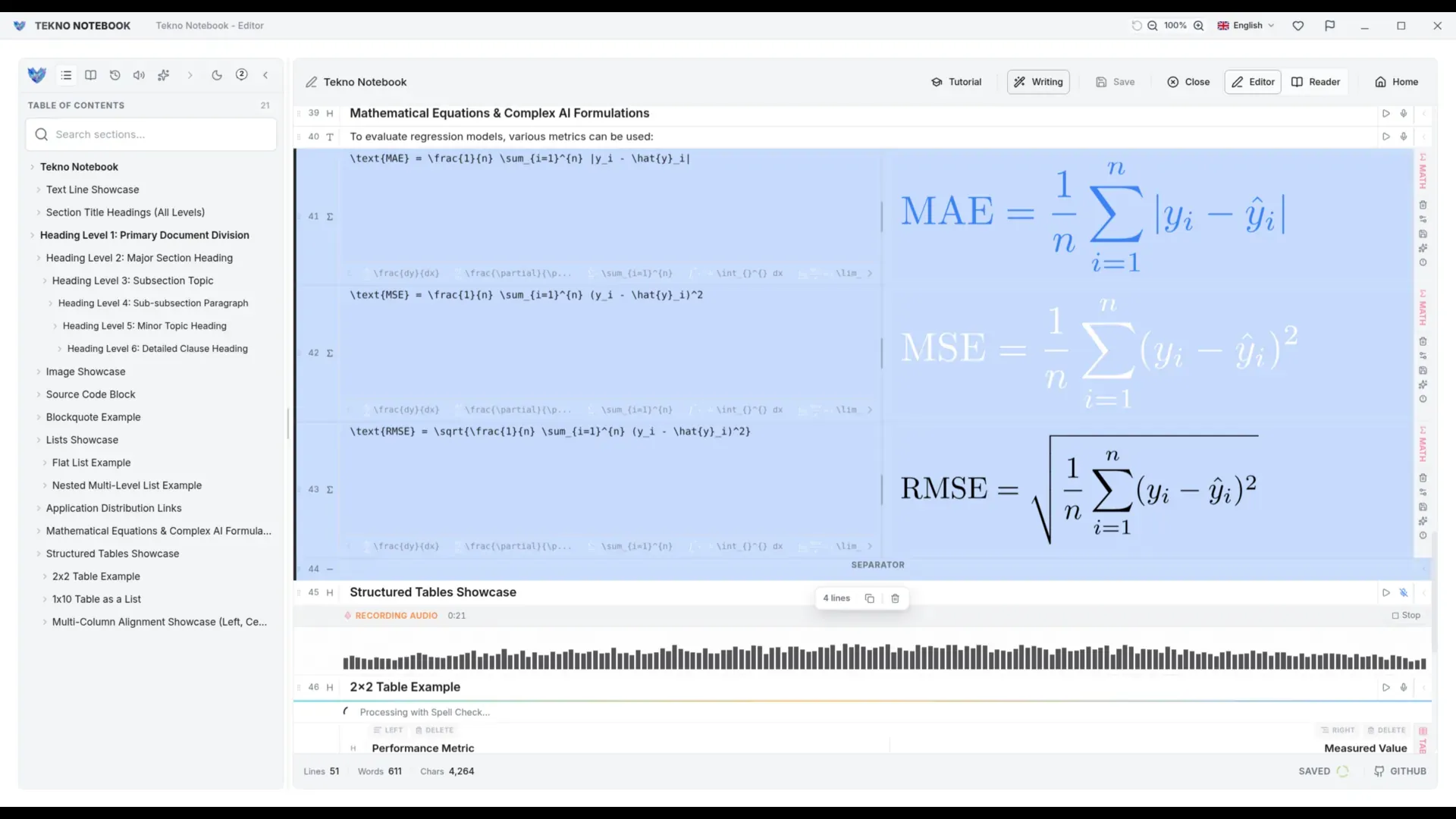
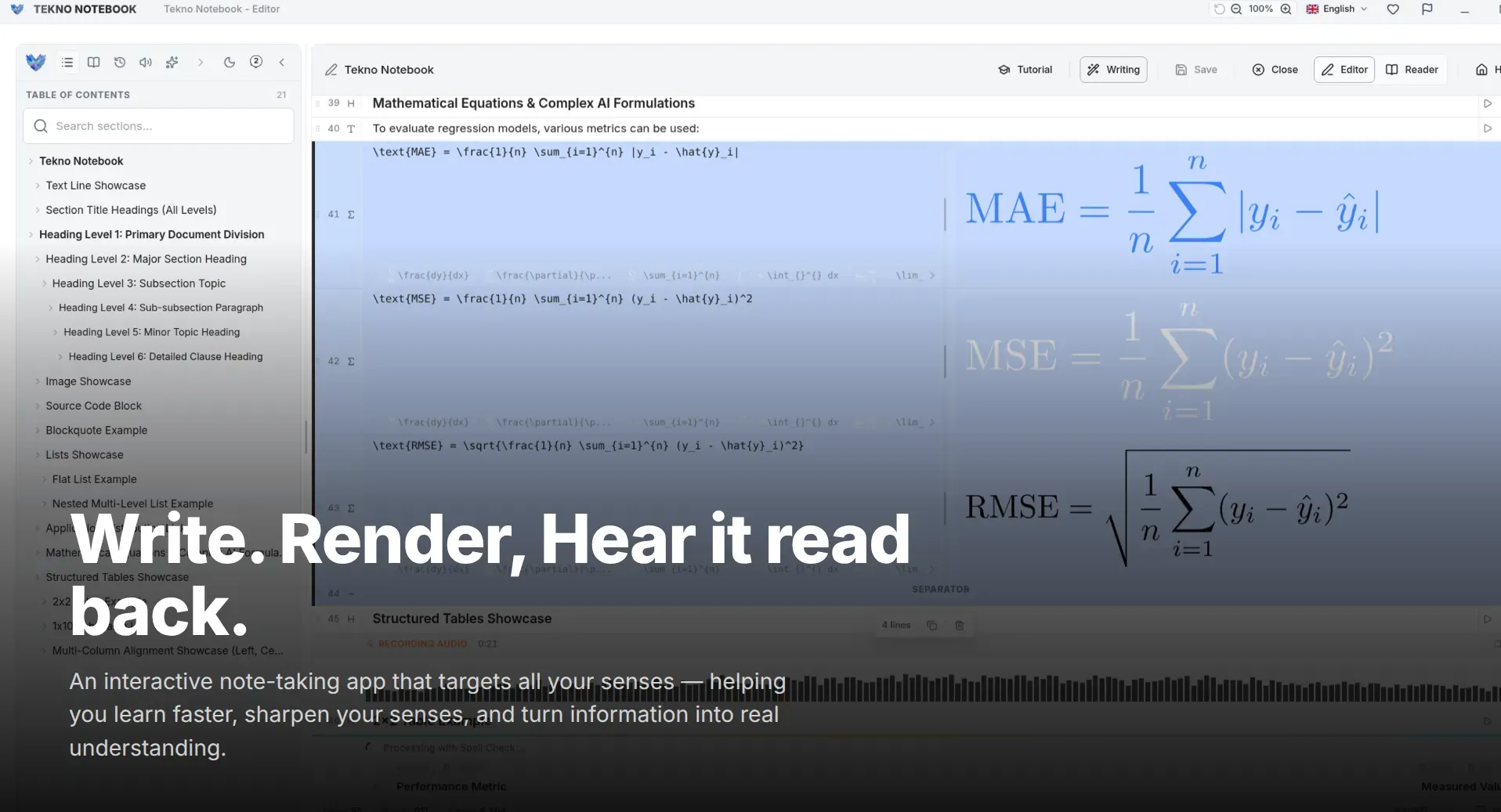
Tekno Notebook's LaTeX autocomplete and live preview let you build clean equations quickly, with units and usage rules tucked directly beneath each line.
2. Review in Reader Mode or Export a Ready-to-Print PDF
Skip squinting at blurry phone photos of whiteboards—review your structured sheet in Reader Mode or export a crisp PDF for a five-minute pre-exam scan.

Tekno Notebook
Build Crisp Math and Physics Formula Sheets Offline in Tekno Notebook
Type equations fast with LaTeX autocomplete and live preview, pair each rule with its units and conditions, and export a clean exam PDF in one click.
- Live LaTeX rendering with smart symbol autocomplete
- Pair every equation with units, meaning, and edge conditions
- Export a crisp printable PDF formula sheet in seconds
- 100% offline desktop app for Windows and Linux