How Large Language Models Predict Text—and Why They Confidently Hallucinate
AI models do not verify truth the way humans do; they predict the next likely piece of text. Understanding tokens and probability helps you use AI smarter and avoid costly errors.
What Actually Happens Behind the Chat Box?
A language model is not querying a fixed encyclopedia—it builds answers piece by piece from statistical patterns.
It can feel bizarre when an AI writes a sharp technical explanation and, two lines later, invents a fake book title with total confidence. That contradiction isn't a random glitch; it comes directly from how large language models are designed.
Two Ideas That Explain Everything
1. Tokens and Next-Piece Prediction
Instead of reading facts like a human, the model slices text into small chunks called tokens and calculates which token is statistically most likely to come next based on patterns learned during training.
2. Why Hallucinations Happen
Because the model is optimized to produce fluent, plausible continuations, missing knowledge often gets filled with whatever sounds most realistic—a convincing citation, a plausible date, or an invented software flag.
Fluency in AI output signals strong language modeling, not verified truth.
4 Habits to Cut AI Errors in Study and Work
- Provide the exact source text you want summarized instead of relying on open-ended memory.
- Explicitly instruct the model to say 'I don't know' when information isn't present.
- Break multi-step reasoning into smaller prompts and verify each stage.
- Always double-check statistics, dates, citations, and code APIs against primary documentation.
Where Language Models Shine—and Where You Lead
Knowing a tool's boundaries lets you move faster without sacrificing credibility.
Language models excel at explaining concepts in plain terms, brainstorming outlines, refactoring drafts, and debugging logic—as long as a human remains the final editor for facts and judgment.

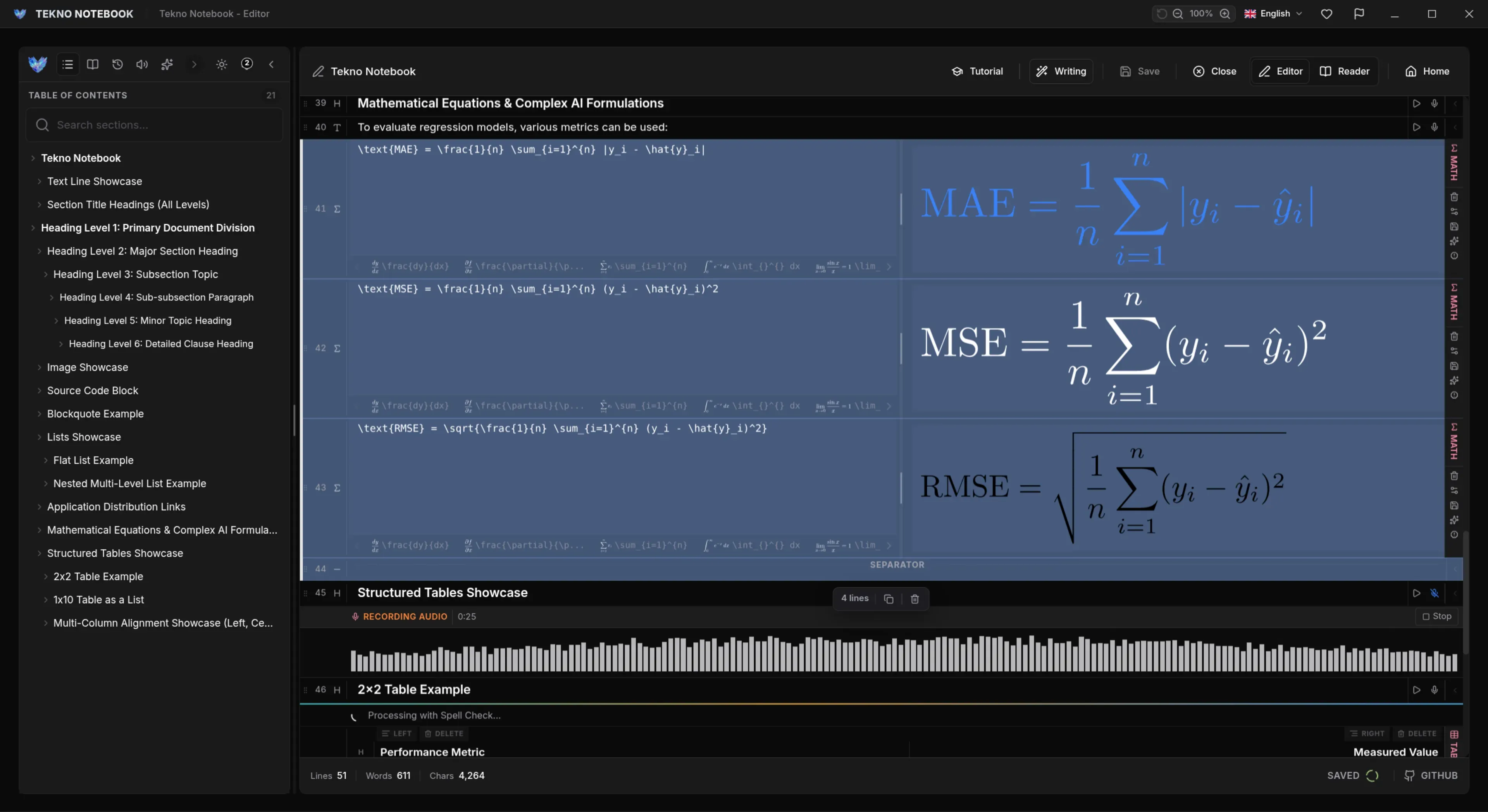
Tekno Notebook
Organize Study and Technical Notes in a Calm Workspace With Tekno Notebook
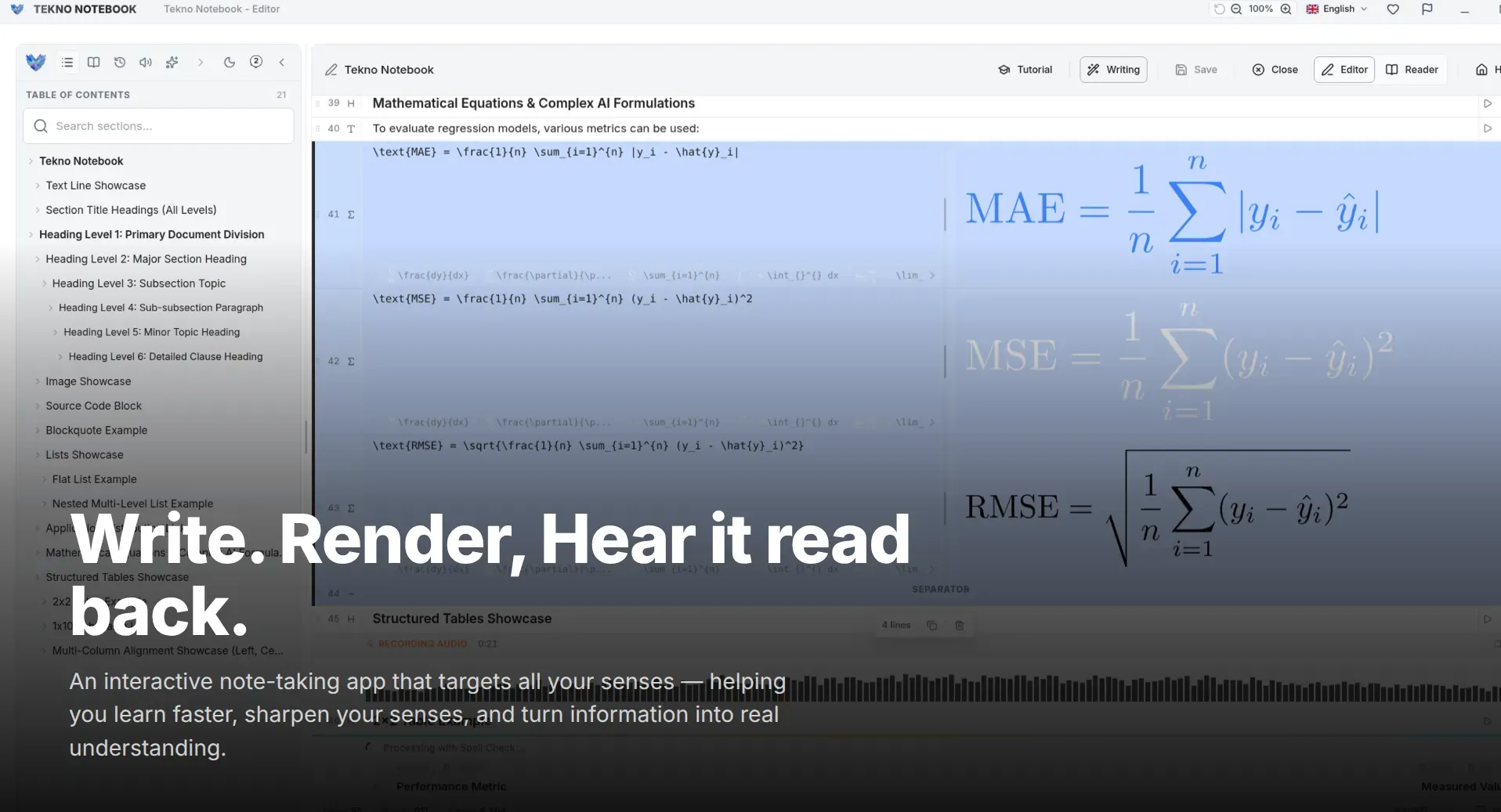
A local, offline-first desktop note-taking app supporting fast formatting, code snippets, live LaTeX math, and built-in audio reading and dictation.
- Works 100% offline with full control over your local files
- Fast keyboard editing with code blocks and live LaTeX equations
- Built-in local Text-to-Speech (TTS) and Speech-to-Text (STT)
- Clean export to PDF, Markdown, and LaTeX