Why Cramming Fails Before Exams: The Science of the Forgetting Curve and Sleep
Pulling a ten-hour all-nighter feels productive, yet most of the material evaporates within days. Learn how spacing review and protecting sleep lock knowledge in.
The Illusion of Mastery During All-Nighters
Cramming floods short-term memory for a few hours, then leaves you blank when questions require real reasoning.
Every student knows the frustration of studying until dawn only to feel foggy and slow when the exam begins. Cramming creates temporary familiarity without giving your brain the time it needs to wire durable connections.
Simple Checklist to Replace Cramming With Spaced Review
Four hours spread across four days builds stronger memory than eight straight hours in one exhausted night.

What Your Brain Does While You Sleep
Sleep isn't lost study time—it is the save button for everything you learned.
Two biological processes only work when you space sessions and rest:
1. Interrupting the Forgetting Curve
Retrieving an idea right as it starts to fade signals to your brain that the memory matters, strengthening recall far more than back-to-back repetition.
2. Deep-Sleep Memory Consolidation
During sleep, your brain replays new concepts and transfers them into long-term storage. Skipping sleep to cram is like typing a long report and shutting down your computer without saving.

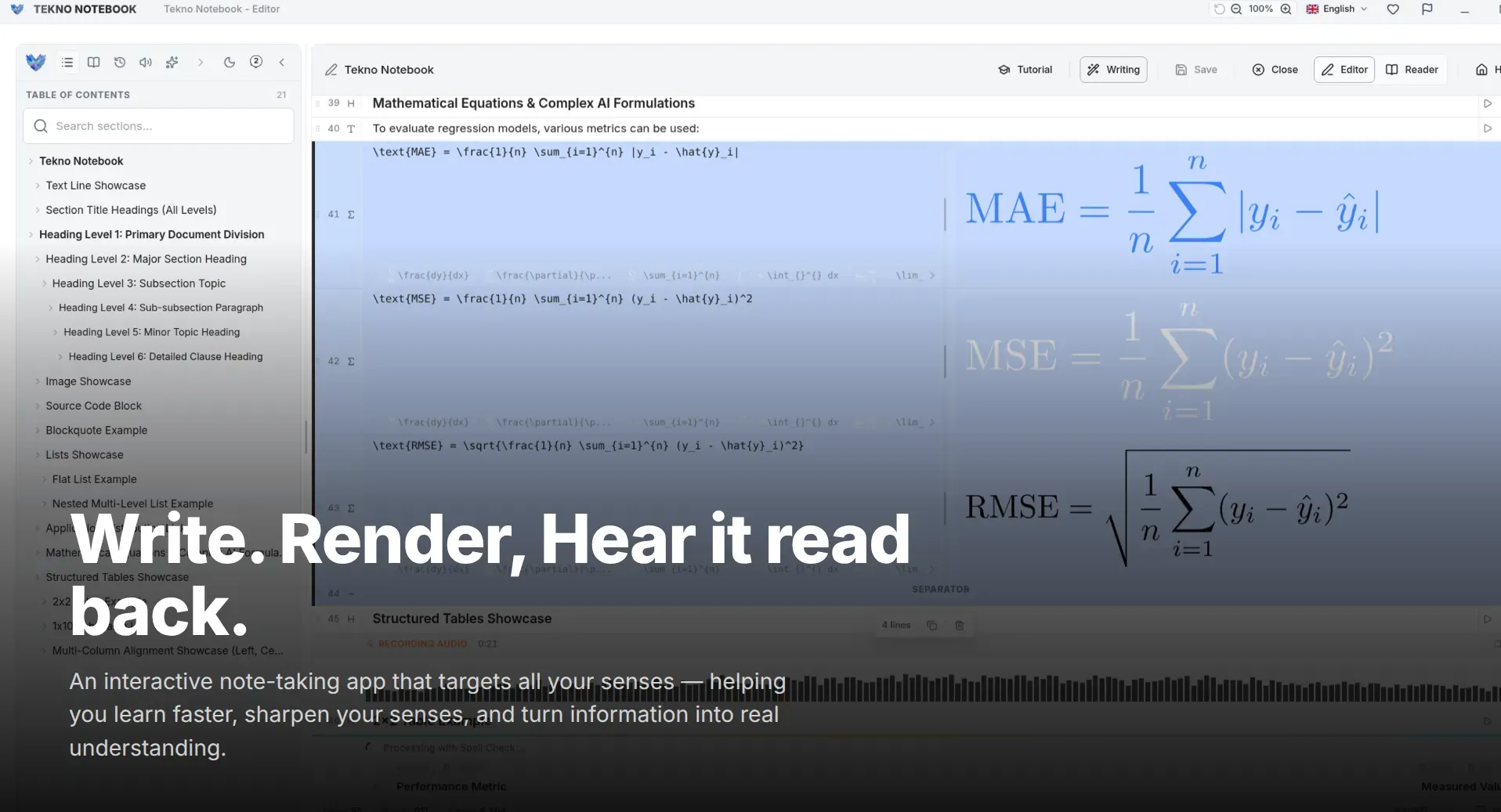
Tekno Notebook
Organize Study and Technical Notes in a Calm Workspace With Tekno Notebook
A local, offline-first desktop note-taking app supporting fast formatting, code snippets, live LaTeX math, and built-in audio reading and dictation.
- Works 100% offline with full control over your local files
- Fast keyboard editing with code blocks and live LaTeX equations
- Built-in local Text-to-Speech (TTS) and Speech-to-Text (STT)
- Clean export to PDF, Markdown, and LaTeX